
Keeping the Desert Alive
Louise Malarvie’s signature layering of dots and pastels sees her work stand out from the crowd, reinforcing her Jaru connections, cultural teachings and identity.
WORDS BY Tina Baum | PHOTOGRAPHY courtesy of the Artist and Waringarri Aboriginal Arts | PUBLISHED 4 September 2024
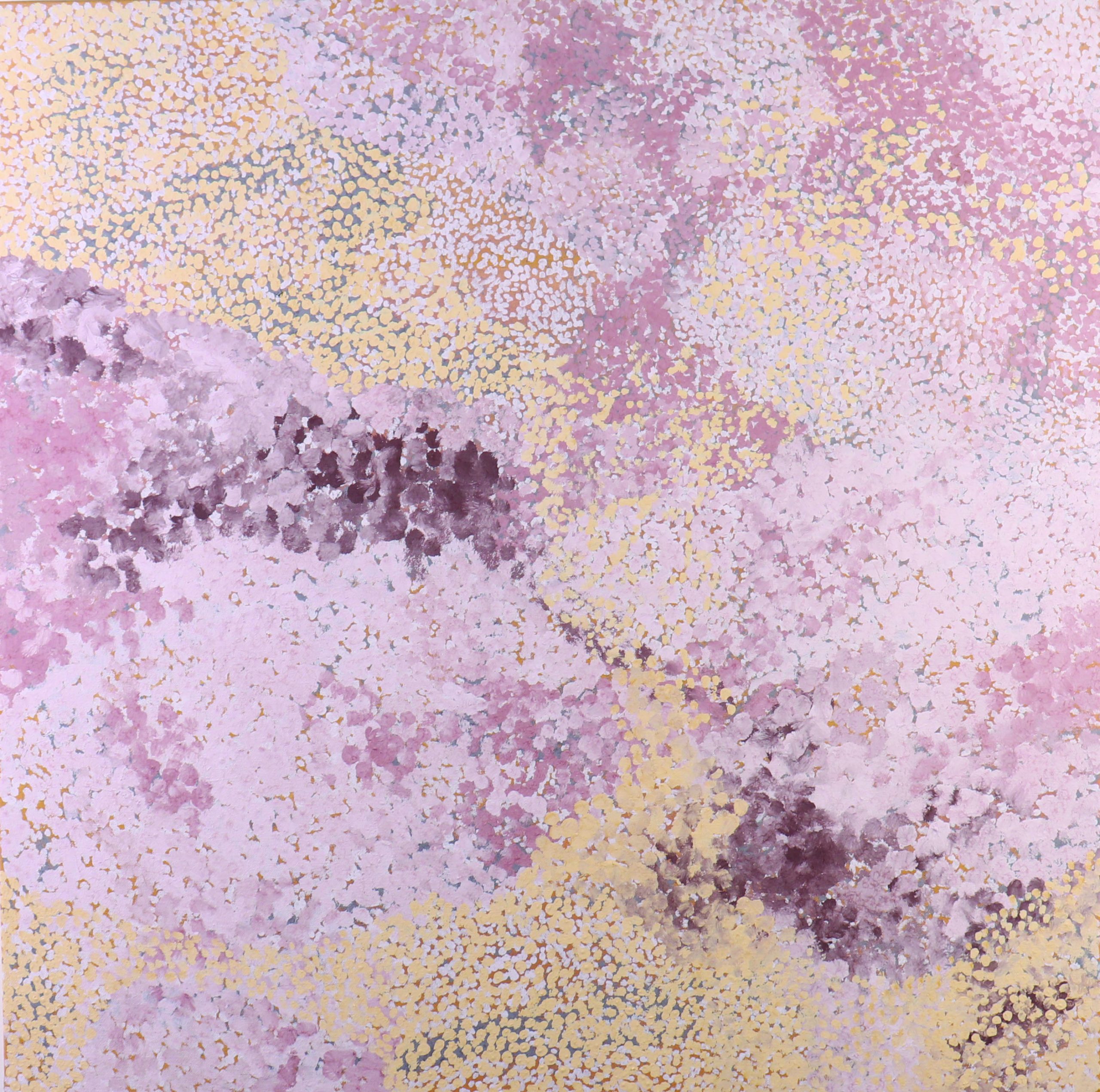
↑ The Wild-Flower. Natural ochre and pigment on canvas, 76 x 76cm. Catalogue number 6965-24.
Early career artist Louise Malarvie frequently showcases visions of her Country and waterways in her works that also reinforce her Jaru connections, cultural teachings and identity. Born in Garramilla/Darwin she moved throughout the Kimberley’s as a child with her family before settling in Kununurra, Western Australia. Influenced by her mother Bessie Malarvie, who she would observe painting along with her Aunty Kittey Malarvie, family and Elders, it was after her mother’s passing that she started her arts practice at Waringarri Arts in 2012. Malarvie is now the custodian for her mother’s lore.
“I draw from my mind and my spirit and it just comes to me,” says Malarvie. “I think about it all the time. It’s healing for me, painting. I feel more connected and close to the country; it makes me happy.”
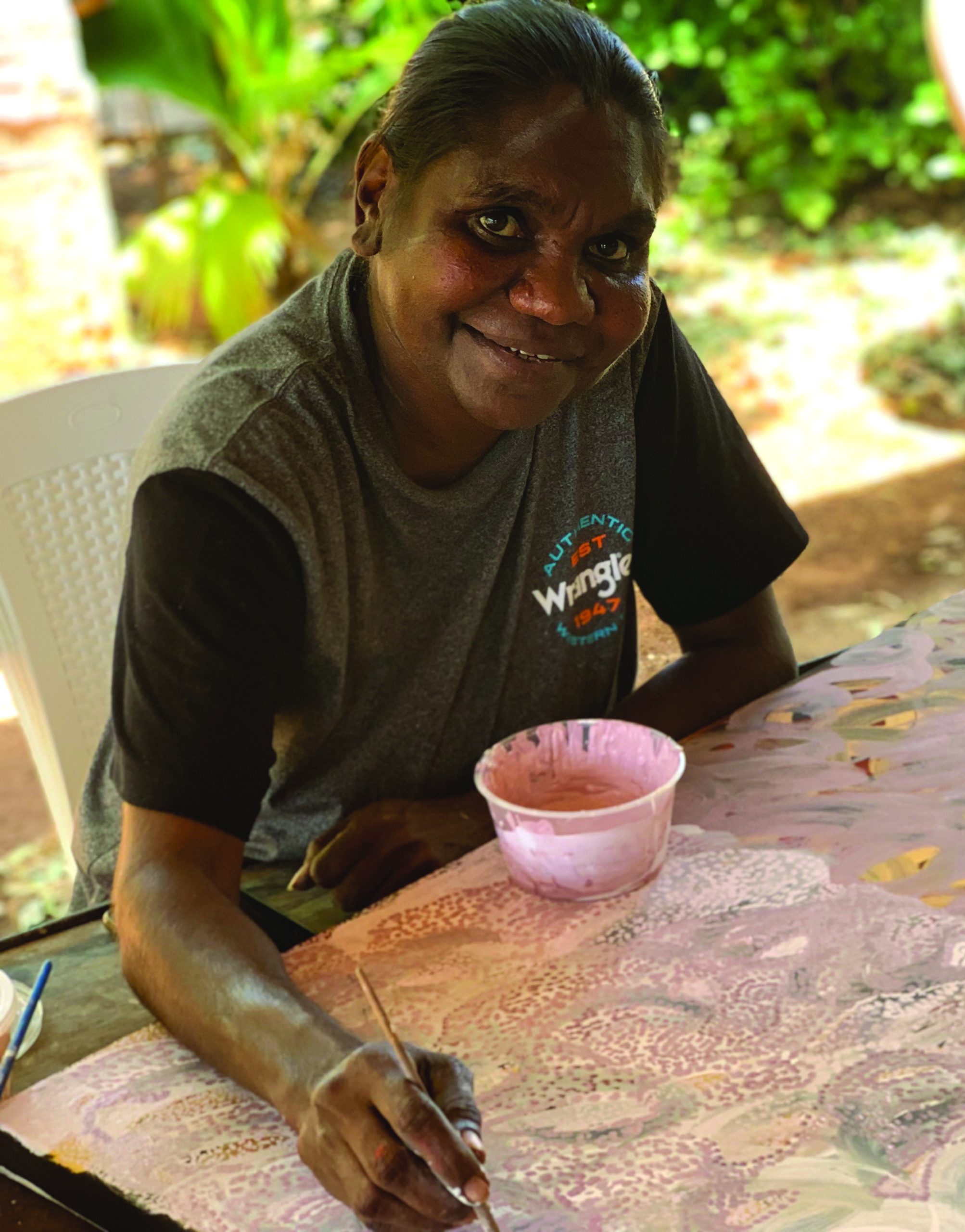
↑ Portrait of Louise Malarvie.
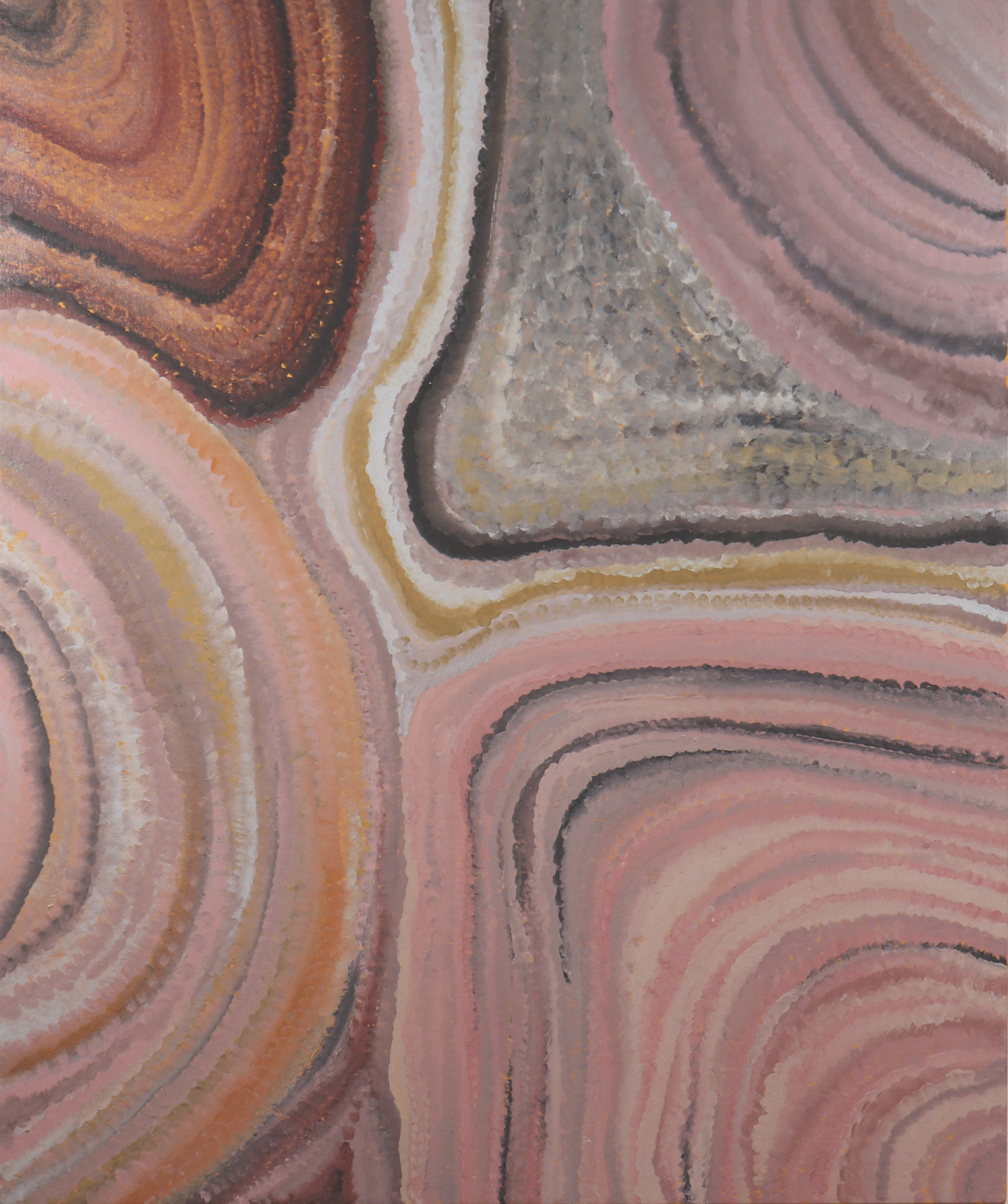
↑ Louise Malarvie, Paraku (Lake Gregory), Natural ochre and pigments on canvas, 122 x 102cm. Catalogue number 6872-2.
In 2022 she won the NATSIAA Emerging Artist award with her work Pamarr Yara, 2022 which interprets the transformative and life-giving floodwaters out on her Great Sandy Desert homelands. In this satellite view of Country, she further refined her signature technique by using a dark pale pink background that is overlaid with differing shades of pale pink colours finely dotted across the canvas along with thick brush strokes to create rhythm and movement of Country.
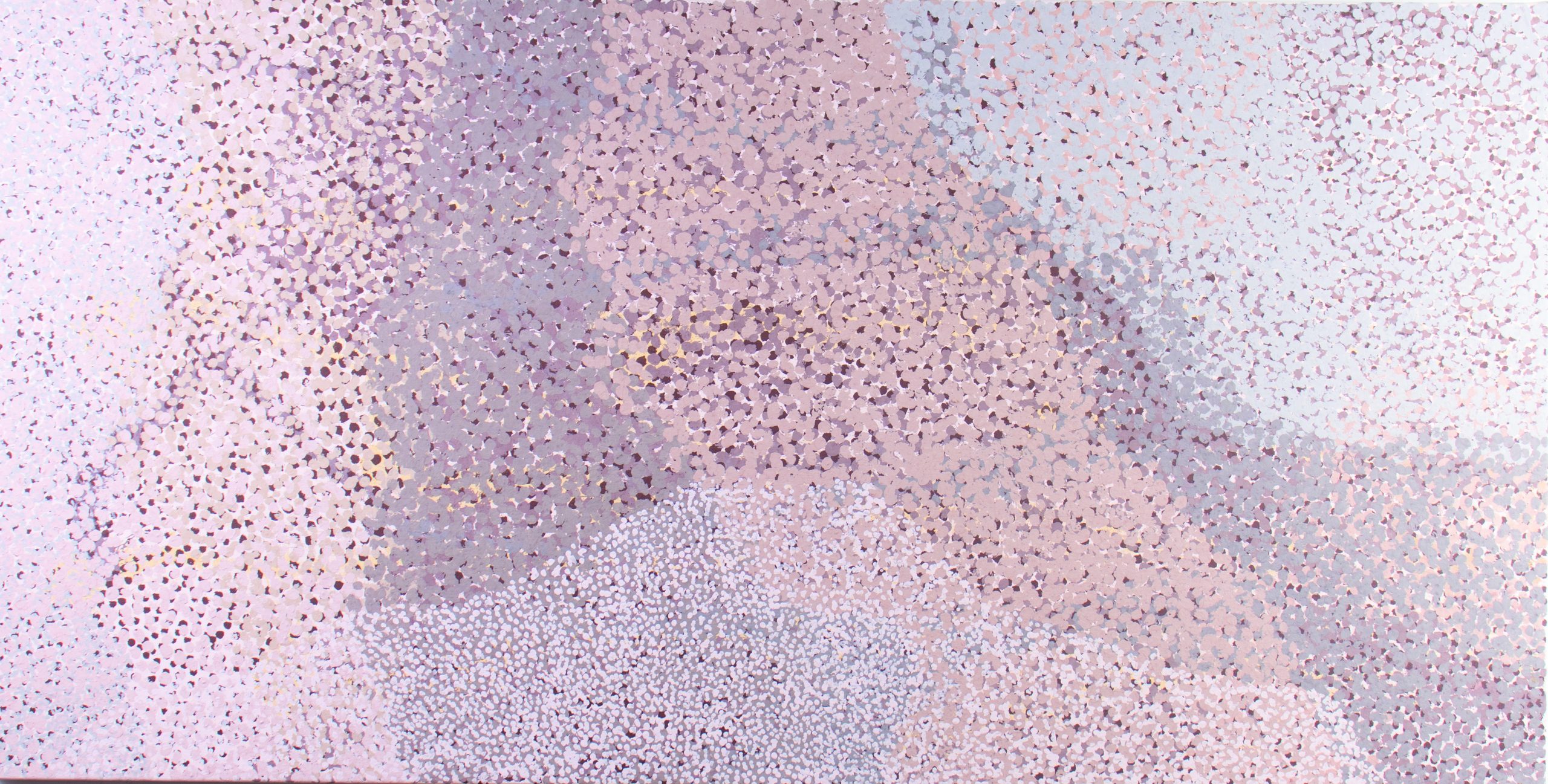
↑ The Wild-Flower, Natural ochres and pigments on canvas, 61 x 122cm. Catalogue number 6996-24.
Her recent creative shifts in patterns, use of primarily pastel shades of pink and abstract markings – as demonstrated in the works from her 2023 solo at Niagara Galleries in Naarm/Melbourne – showcase strikingly different paintings. This new approach is also found in her latest work for the 2024 Darwin Aboriginal Art Fair (DAAF). A striking work for the fair, Paraku (Lake Gregory), showcases a major water feature in her Country near the Malun Community. Here the repeated dotting overlays of pinks, white and red create the mesmerising illusion of shimmering light and swirling movement across the water surface.
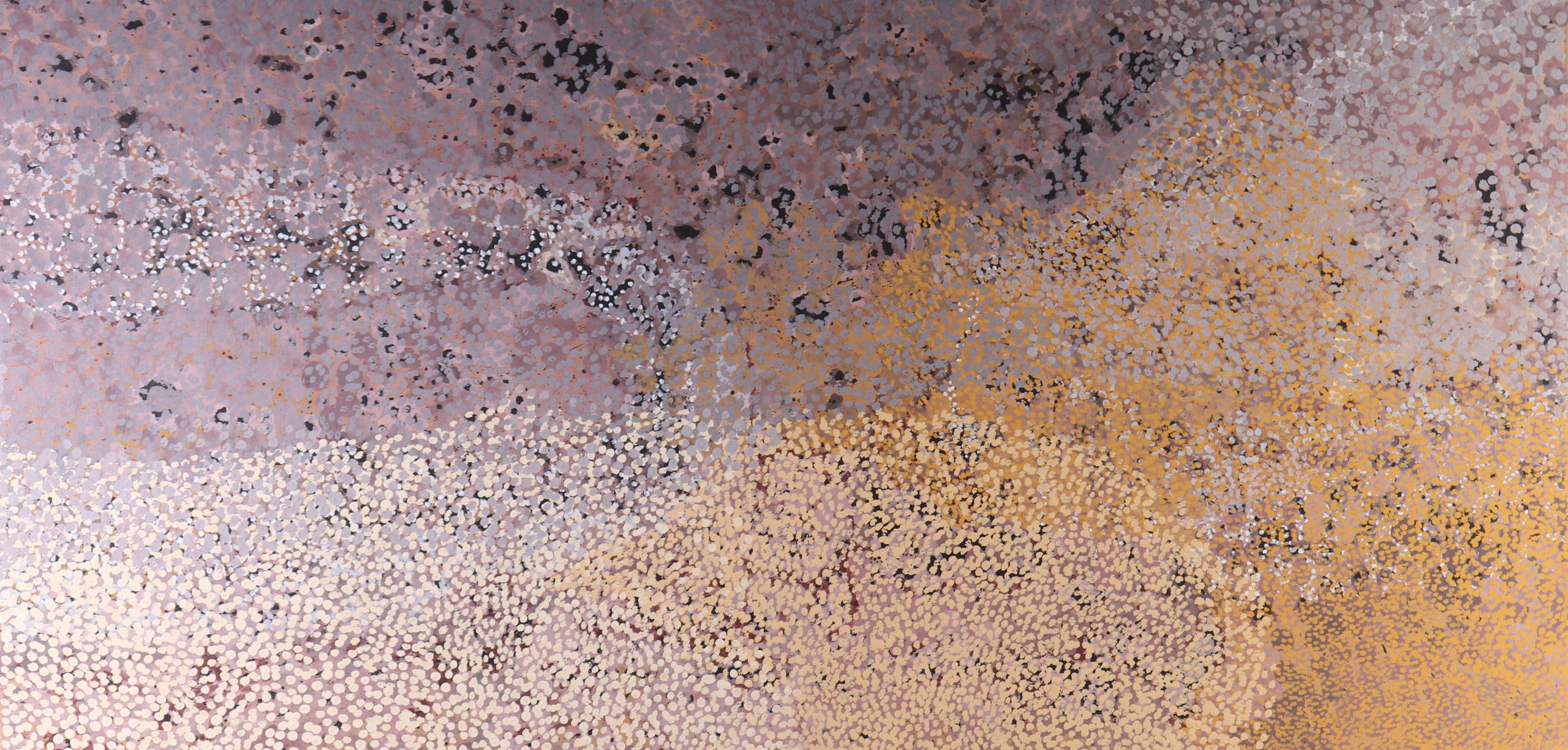
↑ The Wild-Flower, Natural ochres and pigments on canvas, 122.5 x 61cm. Catalogue number 6892-24.
In The Wild-Flower, 2024 Malarvie uses her signature layering of dots and pastel colours again to represent the abundant desert flowers that bloom across Country after the big rains, reinforcing the important cycle of life and their importance as a food source. “After the wet season the wild desert flowers come into bloom all over Country,” Malarvie reflects. “The Wild-Flower keep the desert alive.”
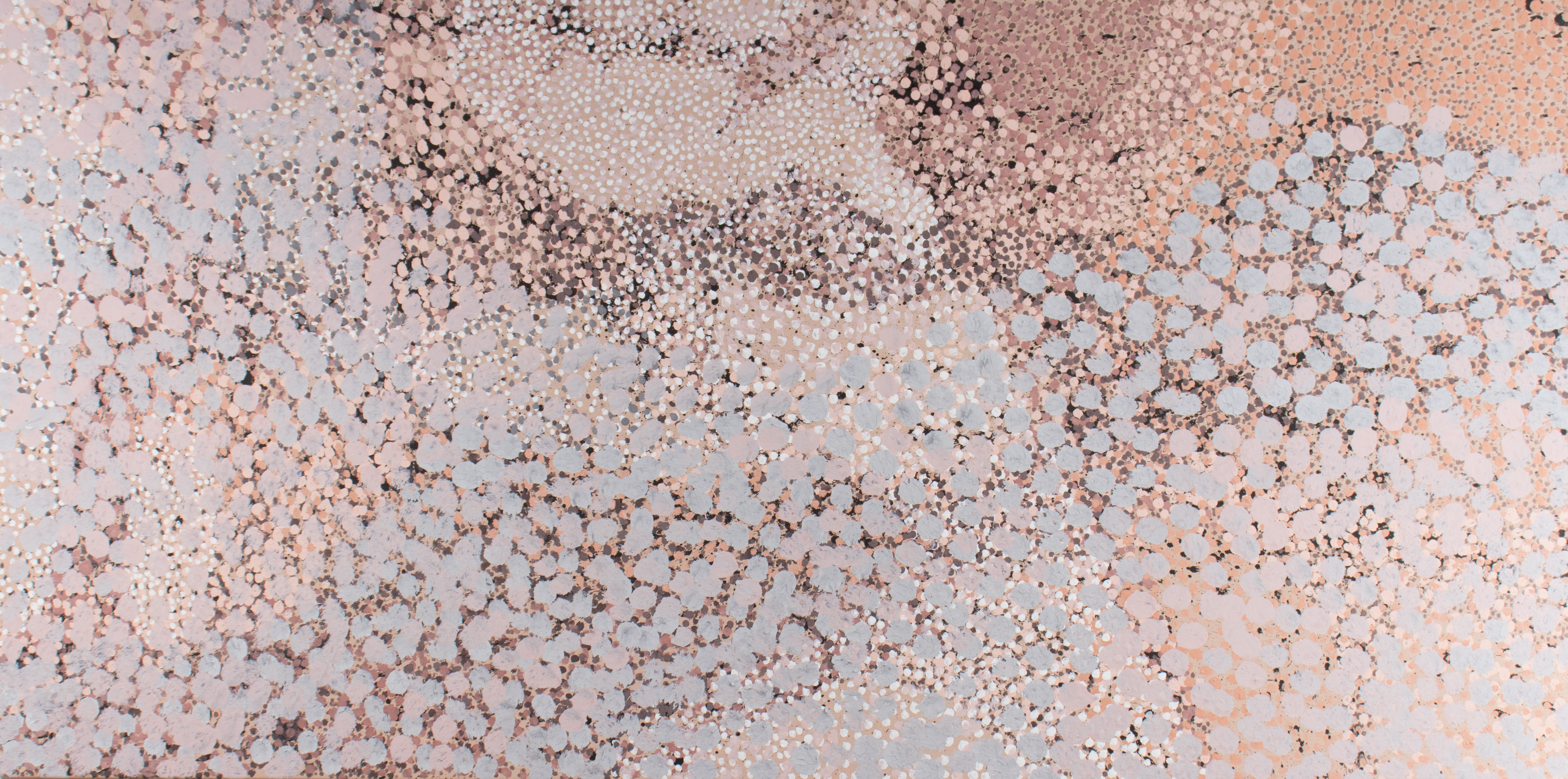
↑ The Wild-Flower, Natural ochres and pigments on canvas, 122.5 x 61cm. Catalogue number 6892-24.
It is this intimate knowledge of Country and her ongoing creative development that shows an exciting sophistication to her works that ensures her individual style and designs stand out from her peers. It also makes her an exciting artist to watch in the future. Come September, Malarvie hosts an exicitng solo with Paul Johnstone Gallery in Darwin.
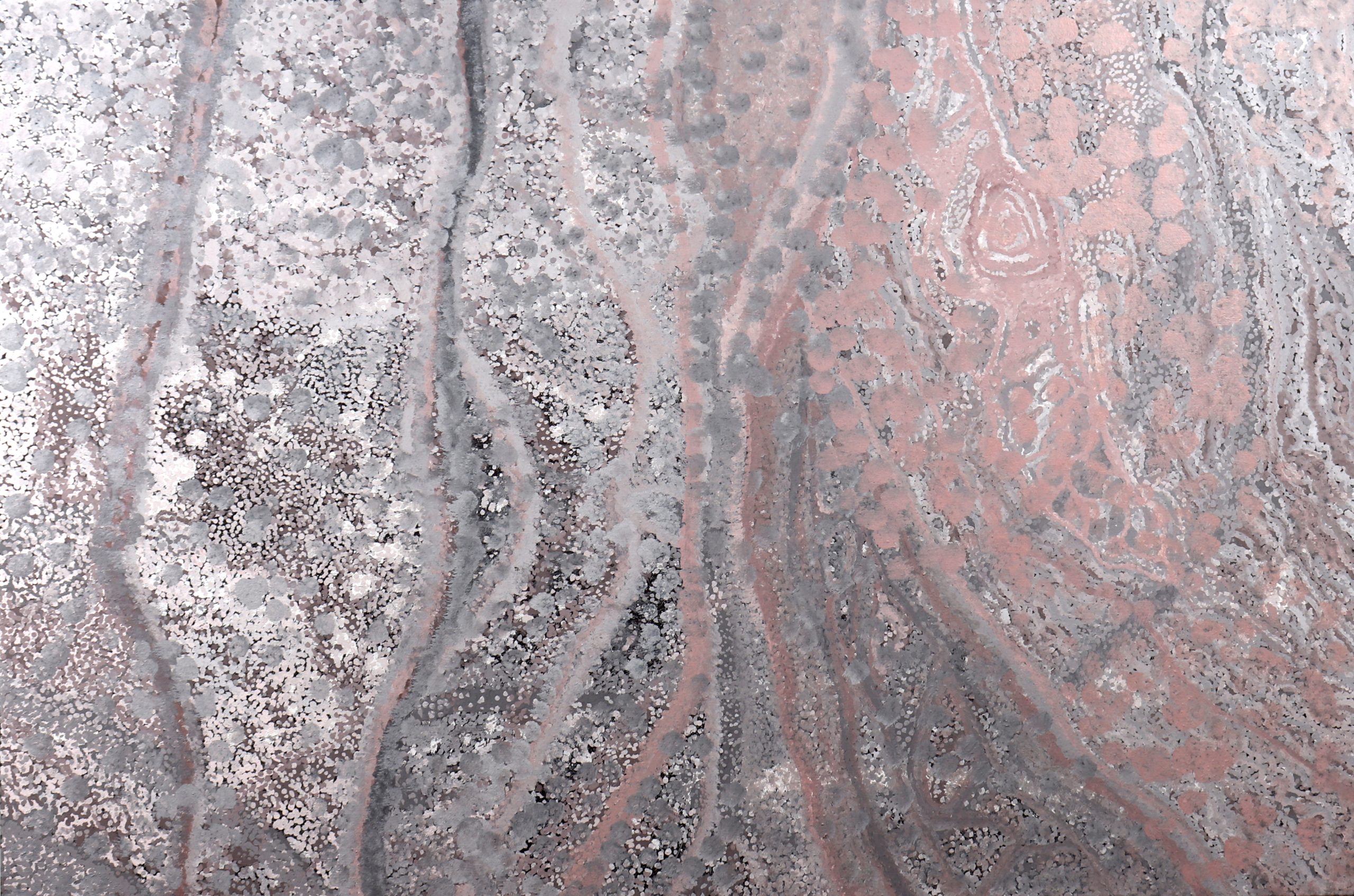
↑ Paraku - (Lake Gregory), 155 x 100 cm / Natural ochre and pigments on canvas. Catalogue number 6867-24.
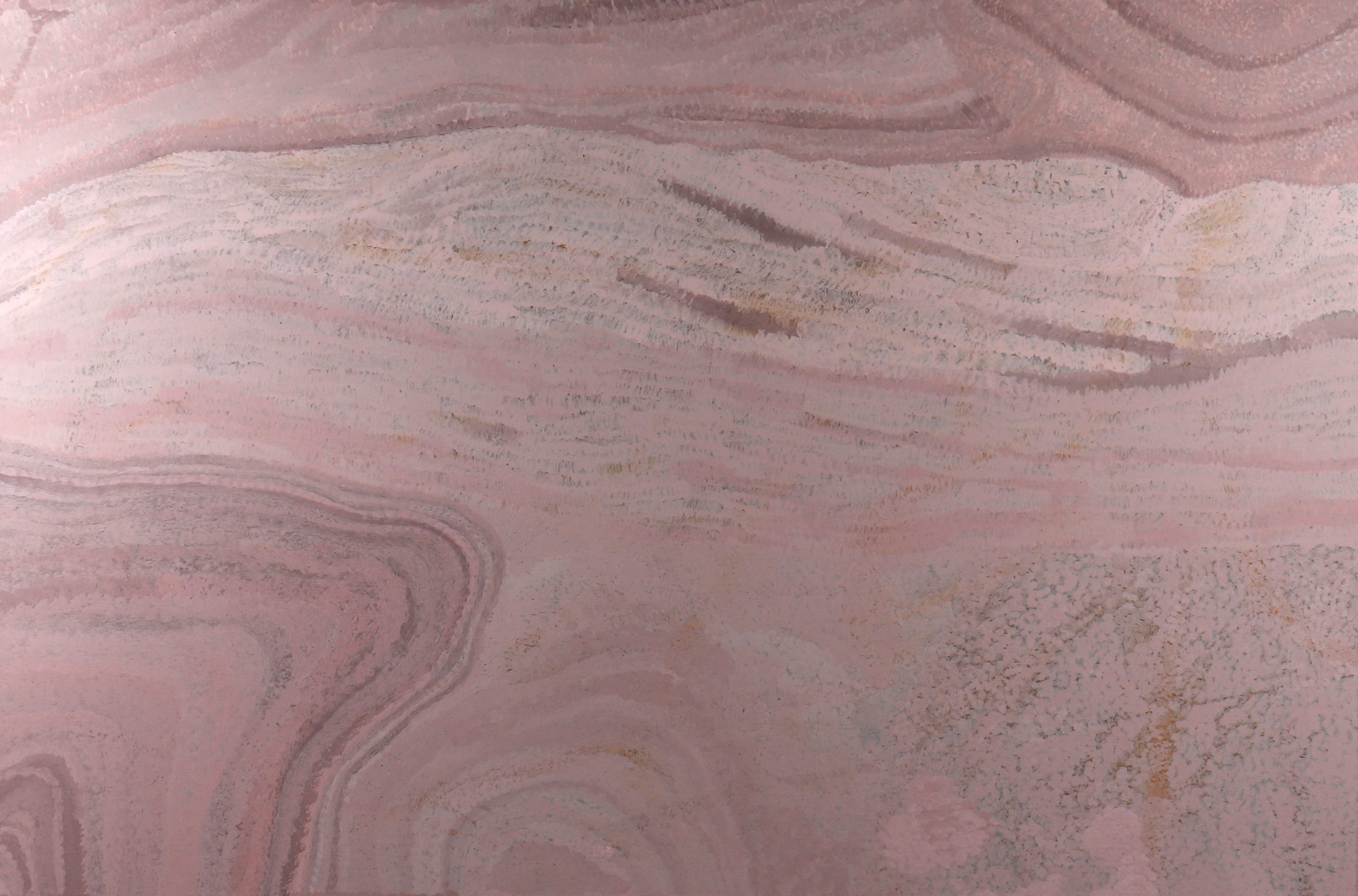
↑ Paraku (Lake Gregory), 100 x 150 cm / Natural ochre and pigments on canvas. Catalogue number 6865-24.
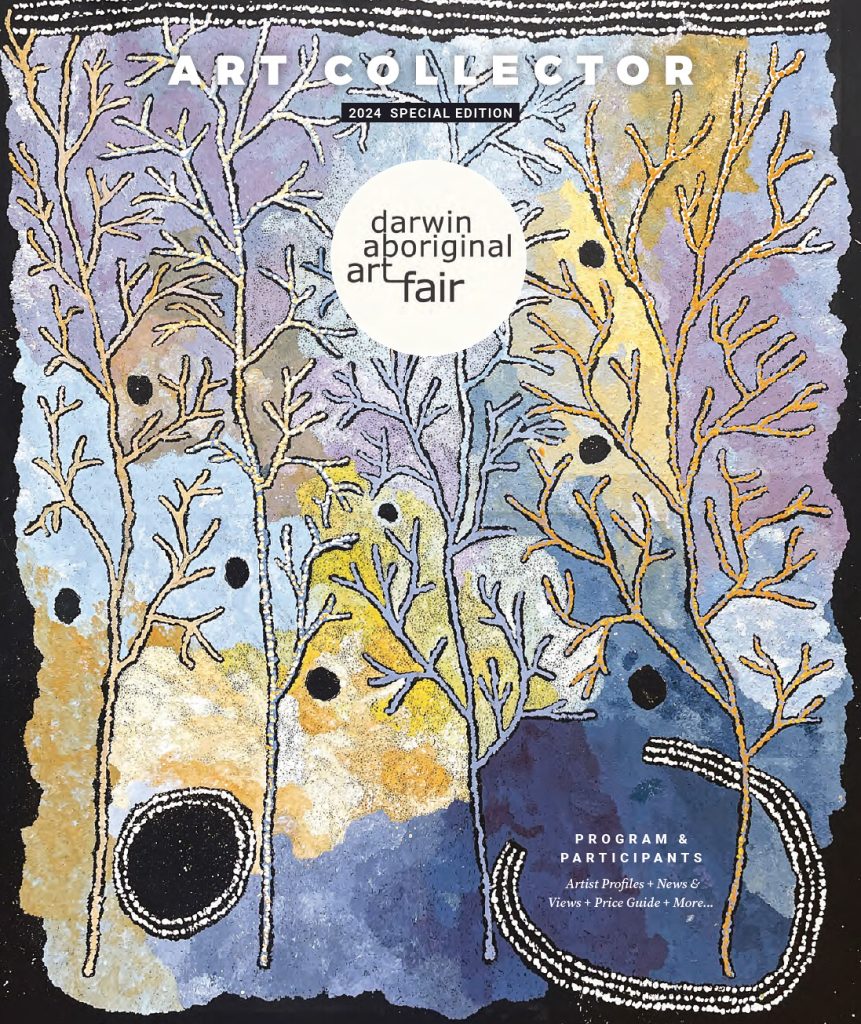
This article originally appeared in the Art Collector 2024 Darwin Aboriginal Art Fair Special Edition, click here to read more.
Cover Art by Betty Mula, 33-24 PunuTjuta, Synthetic polymer on linen, 152 x 122 cm. Courtesy of the Artist and Mimili Maku Arts.
Contributor Tina Baum holds ties to the Gulumirrgin (Larrakia)/Wardaman/Karajarri Peoples. She is a senior curator, Aboriginal and Torres Strait Islander Art at the National Gallery of Australia.


