
What makes buying First Nations art so special?
We asked our participating Art Centres to share their thoughts—and their responses reveal just how powerful, meaningful, and transformative these purchases can be.
Buying First Nations art isn’t just about acquiring a beautiful object—it’s about investing in culture, community, and connection to Country.
Written by Mae Ganambarr

Jilamara Arts and Crafts Association at DAAF 2024. Photo by Marley Morgan.
As Aboriginal Regional Arts Alliance (NSW) Aboriginal Corporation puts it:
“When you buy First Nations art, you’re not just purchasing a beautiful piece—you’re investing in culture, community, and connection to Country. Every artwork holds deep meaning, stories, and knowledge passed through generations. It’s a way of honouring the world’s oldest living culture while directly supporting the artists and their communities.”
—Lorrayne Fishenden, Gomeroi Yinaar, CEO of ARAA NSW
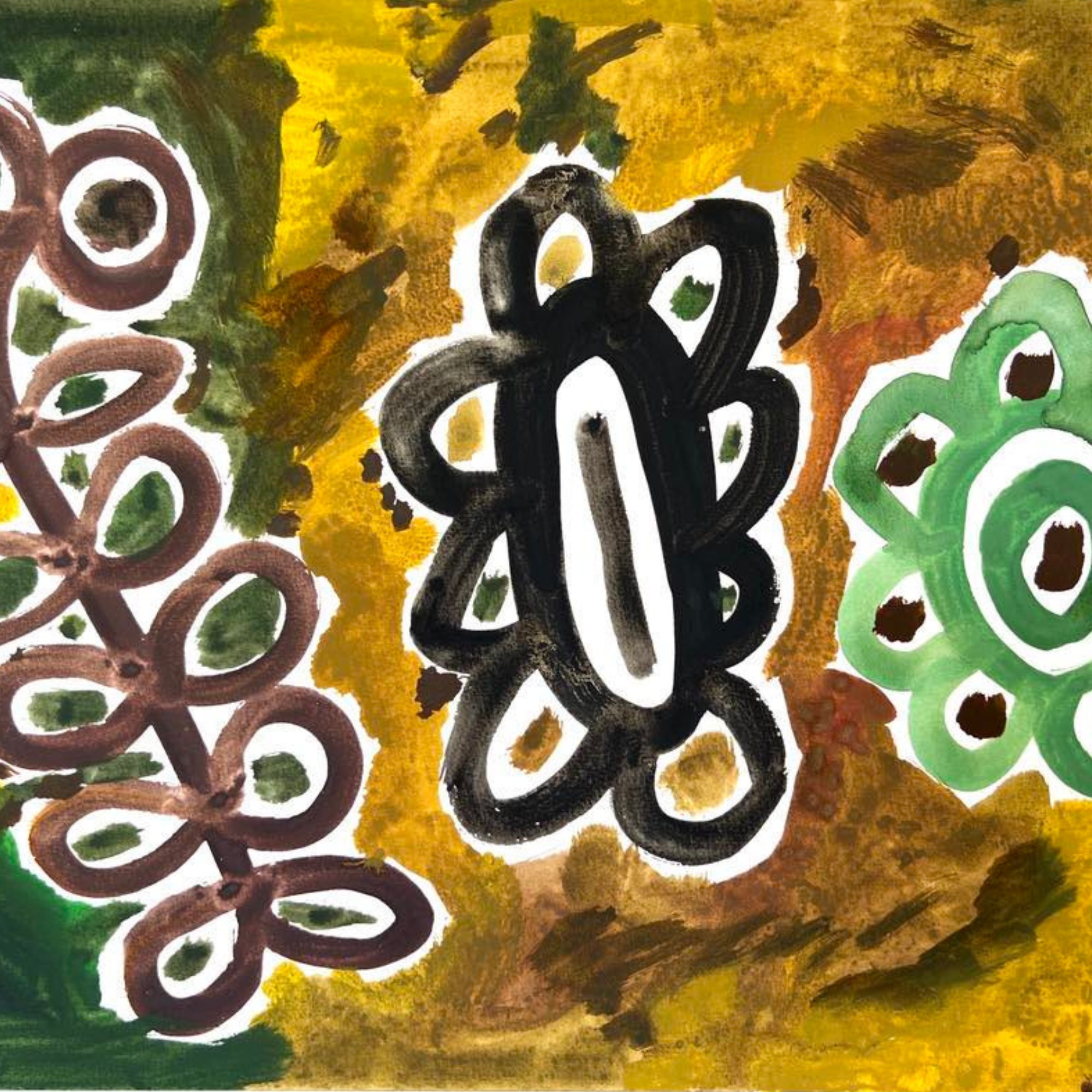
Kylie Caldwell, Untitled (italics), Watercolour on paper, 42cm x 30cm, 2024. Photo by Kylie Caldwell. Image courtesy of Aboriginal Regional Arts Alliance (NSW) Aboriginal Corporation.
ACHAA NSW echoes this sentiment:
“Buying Aboriginal art is a ticket into the enduring cultures of this land, connecting Country, sharing spirit and sustaining communities.”
—Steve Miller, CEO, ACHAA

Rubyrose Bancroft, Ngullingah Jugun 2, Acrylic on canvas, 100 x 85 cm, 2024. Image courtesy of Boomalli Aboriginal Artists Co-operative.
The artists themselves speak to the pride and significance behind every piece. Kathleen Nanima Rambler, an artsworker from Artists of Ampilatwatja, shares:
“We feel proud when someone buys our art. It is an opportunity for us to share our knowledge about bush medicine plants and our lands.”
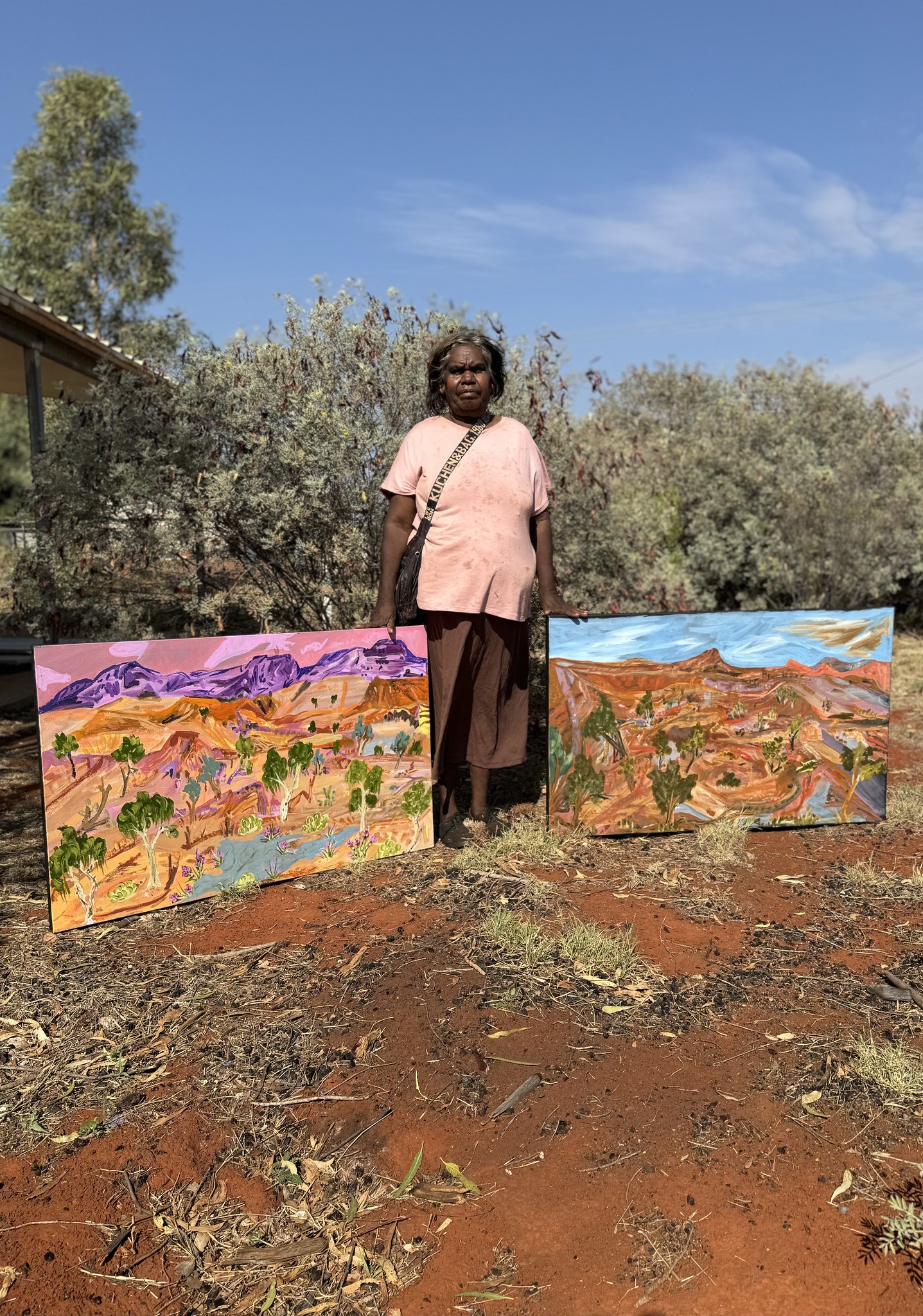
Elizabeth Ngwarraye Bonney at Artists of Ampilatwatja art centre, 2024. Photo by Meagan Jacobs.
At Bábbarra Women’s Centre, art is understood as both livelihood and legacy:
“When you buy a piece of First Nations Artwork, you support the artist and art centre. Artwork is more than colour and paint, it is representative of a story, a historical or spiritual story about the land and country we live on. Purchasing First Nations artwork connects the buyer to the artist and our shared identity.”
—Jess, Manager, Bábbarra Women’s Centre
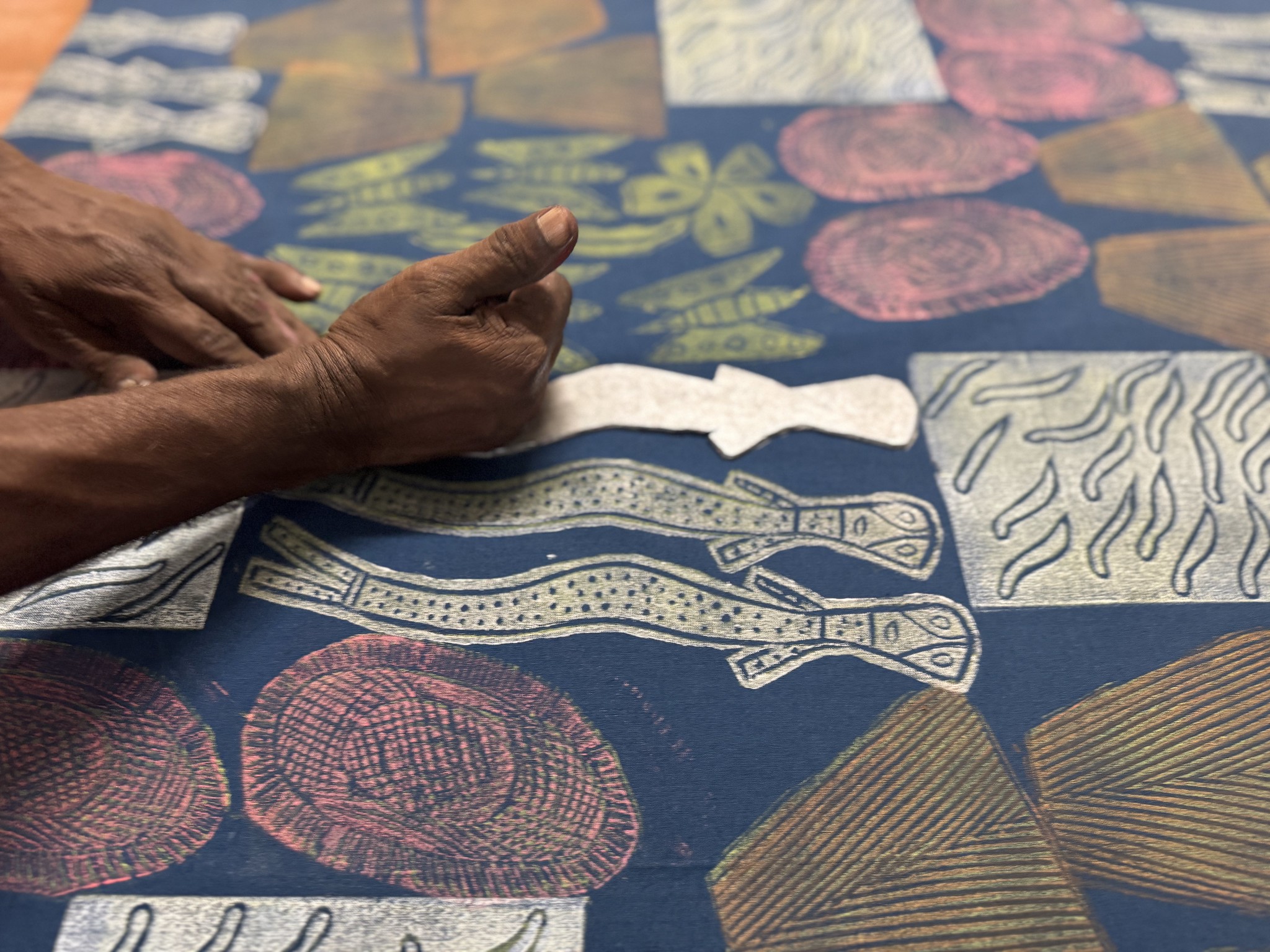
Janet Marawarr, Mimih (spirit) and Rolk ( Maggot),Textile ink on cotton, 300cm x 110cm, 2025, Photo by Jessica Stalenberg, Courtesy of Bábbarra Women's Centre
See you in August!
Supporting First Nations art means supporting the stories, knowledge, and strength of the world’s oldest living cultures. It’s a way to foster real cultural connection and make a positive difference in the lives of artists and their communities—especially in regional and remote parts of Australia where economic opportunities are limited, but cultural richness runs deep.
So the next time you buy First Nations art, remember: you’re not just buying art. You’re honouring a story.


