
Celebrating First Nations arts and culture across Australia
Every year, a collective of organisations work to celebrate and promote the amazing diversity of First Nations arts and cultural practice in Australia.
Over the next few months, we’re taking you across this rich and dynamic land to introduce you to just some of the Art Centres, artists, creatives and thought leaders involved in this collective. We’ll also fill you in on how you can be part of the 2022 celebrations!
The Collective of events includes The Darwin Aboriginal Art Fair (DAAF), National Indigenous Fashion Awards (NIFA), Garma Festival, the Telstra National Aboriginal and Torres Strait Islander Art Awards (NATSIAAs), National Indigenous Music Awards (NIMAs), and the Salon Projects events.
Words by | Camilla Wagstaff
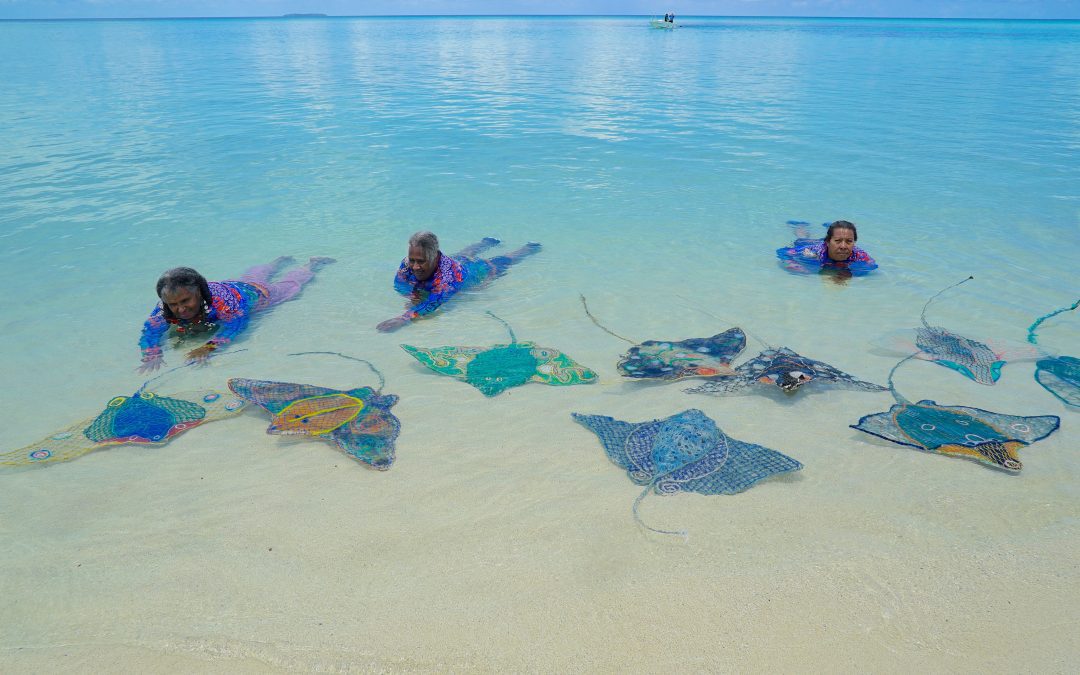
Cover Image | courtesy of Erub Arts
Today, we’re taking you to Far North Queensland…
Boasting some of the most astonishing reef systems and lush tropical rainforests in the world, Far North Queensland is home to 70 national parks and three World Heritage Sites.
This incredible area is dominated by the Cape York Peninsula, which stretches north of the Sunshine State to the waters and islands of the Torres Strait and west to the Gulf Country.
FNQ is the only region that boasts two distinct First Nations cultures – Aboriginal and Torres Strait Islander. Intricate lino and screen prints, Ghost Net sculptures (made of discarded fisherman’s nets that wash up on local beaches), wearable art, masks and wood carvings take cue from the surrounding seas and skies, as well as the life they hold. FNQ and Torres Strait artists are also known for their fresh painting style often comprising a more coastal palette than their desert neighbours.
Art Centre: Girringun Aboriginal Corporation
Emerging from the luscious Queensland rainforest and a culture spanning tens of thousands of years, the Girringun Aboriginal Corporation is home to myriad multi-award-winning and exhibiting artists. These artists artfully transform their stories, environments and ancient culture into vital and vibrant images, sculptures and designs.
The Art Centre represents weavers, painters, potters, textile artists and makers of traditional objects from nine Traditional Owner Groups. These include the Nywaigi, Gugu Badhan, Warrgamay, Warungnu, Bandjin, Girramay, Gulngay, Jirrbal and Djiru people.
Look out for work by Girringun rising star Cherie Mooner at this year’s Darwin Aboriginal Art Fair, held at the Darwin Convention Centre 5 to 7 August 2022.
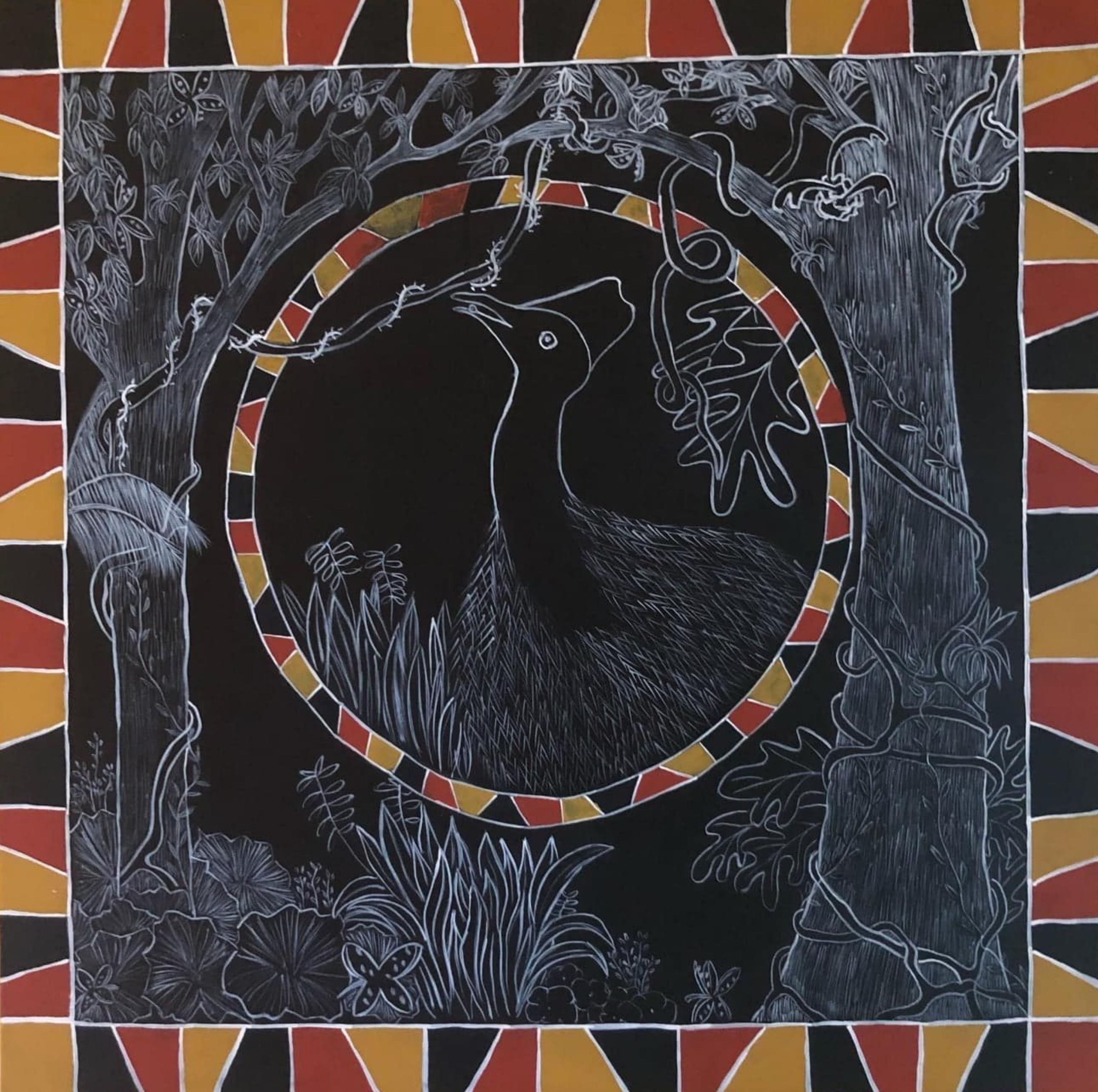
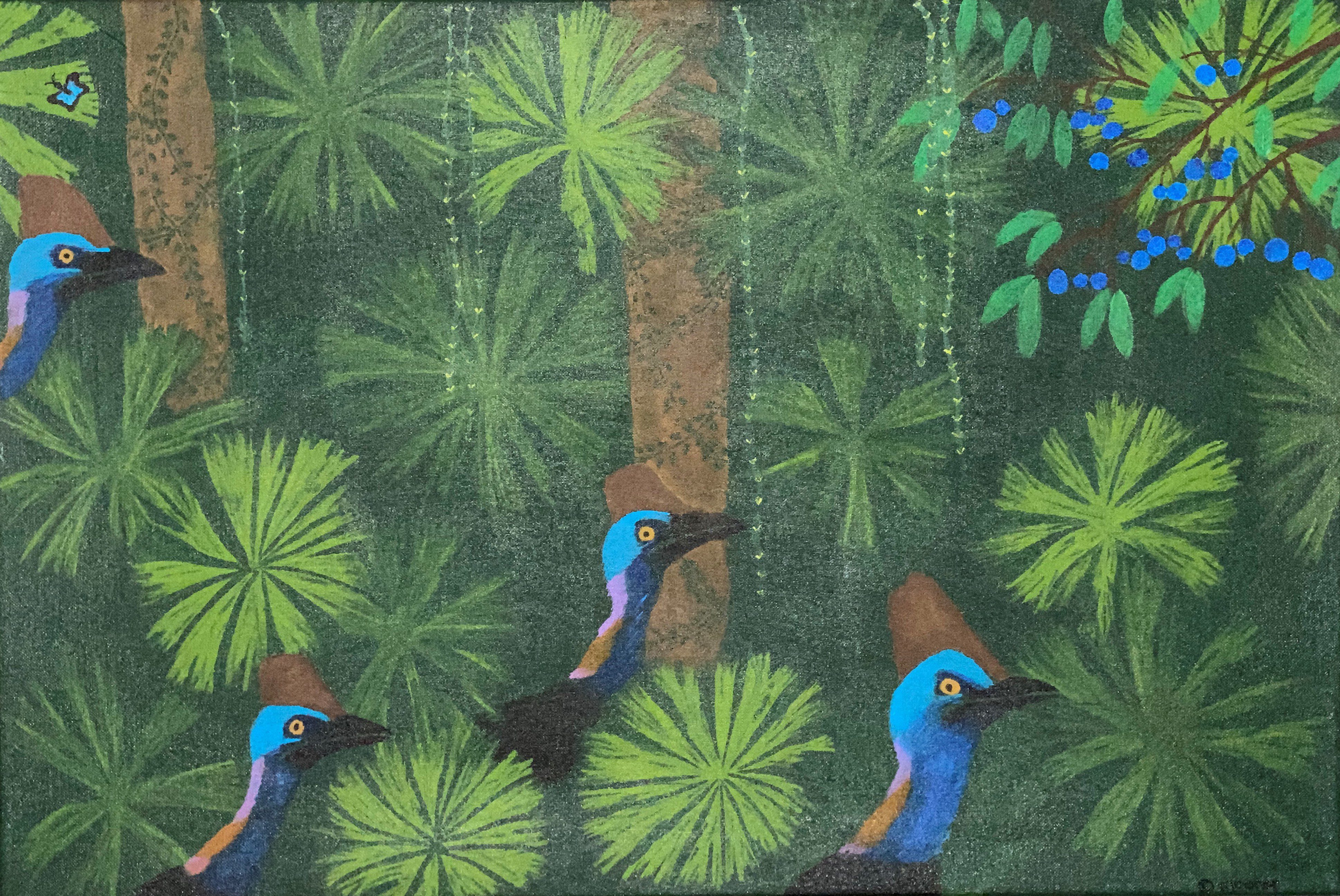
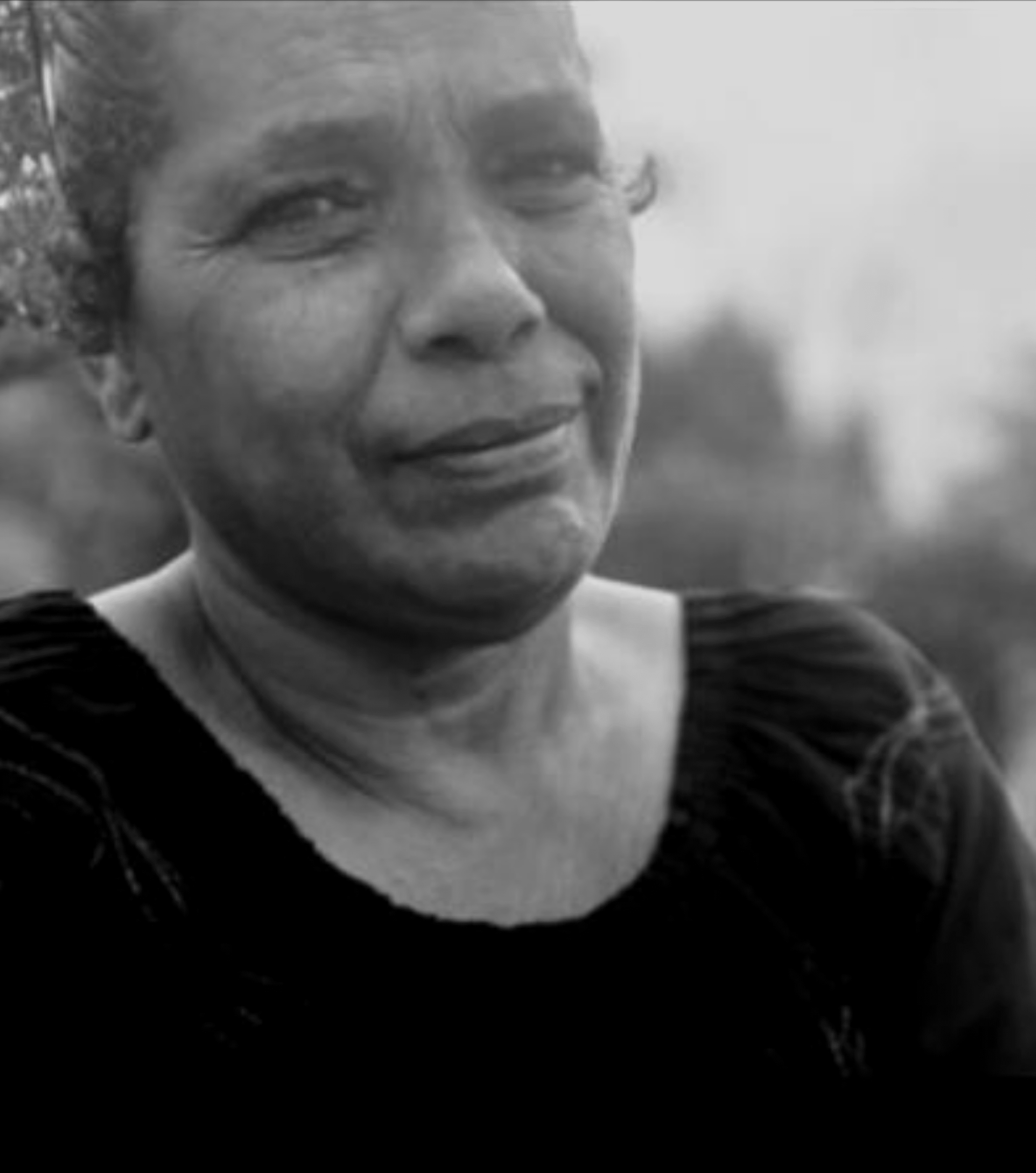
Above: Cherie Mooner, Cassowary feeding in the Forest, Acrylic on Canvas, 75cm x 74cm x 1.5cm, 2022. Below: 2) Gunduy in the Rainforest, Cherie Mooner, Acrylic on Linen. 2021, 51.5cm x 76.5cm. 3) Artist Cherie Mooner. All photos courtesy of Girrringun Aboriginal Art Centre.
Artist: Kyra Mancktelow
It’s been a watershed few years for emerging Quandamooka artist Kyra Mancktelow. With links to the Mardigan people of Cunnamulla in Outback Queensland, Kyra’s artistic practice powerfully investigates legacies of colonialism, trauma, strength and resilience.
She was recognised at the 2021 National Aboriginal and Torres Strait Islander Art award for her haunting piece Moongalba II, which saw her recreate the uniforms forced upon First Nations children during the Moongalba Mission on Minjerribah (Stradbroke Island).
The Telstra NATSIAAs are now the richest of any art award in Australia. The annual exhibition held at the Museum and Art Gallery of the Northern Territory (MAGNT) proudly demonstrates the richness and diversity of First Nations contemporary practice, and the deep cultural knowledge of Aboriginal and Torres Strait Islander voices within the arts. This year’s awards ceremony is held on Friday 5 August, with the exhibition opening on Saturday 6 August.
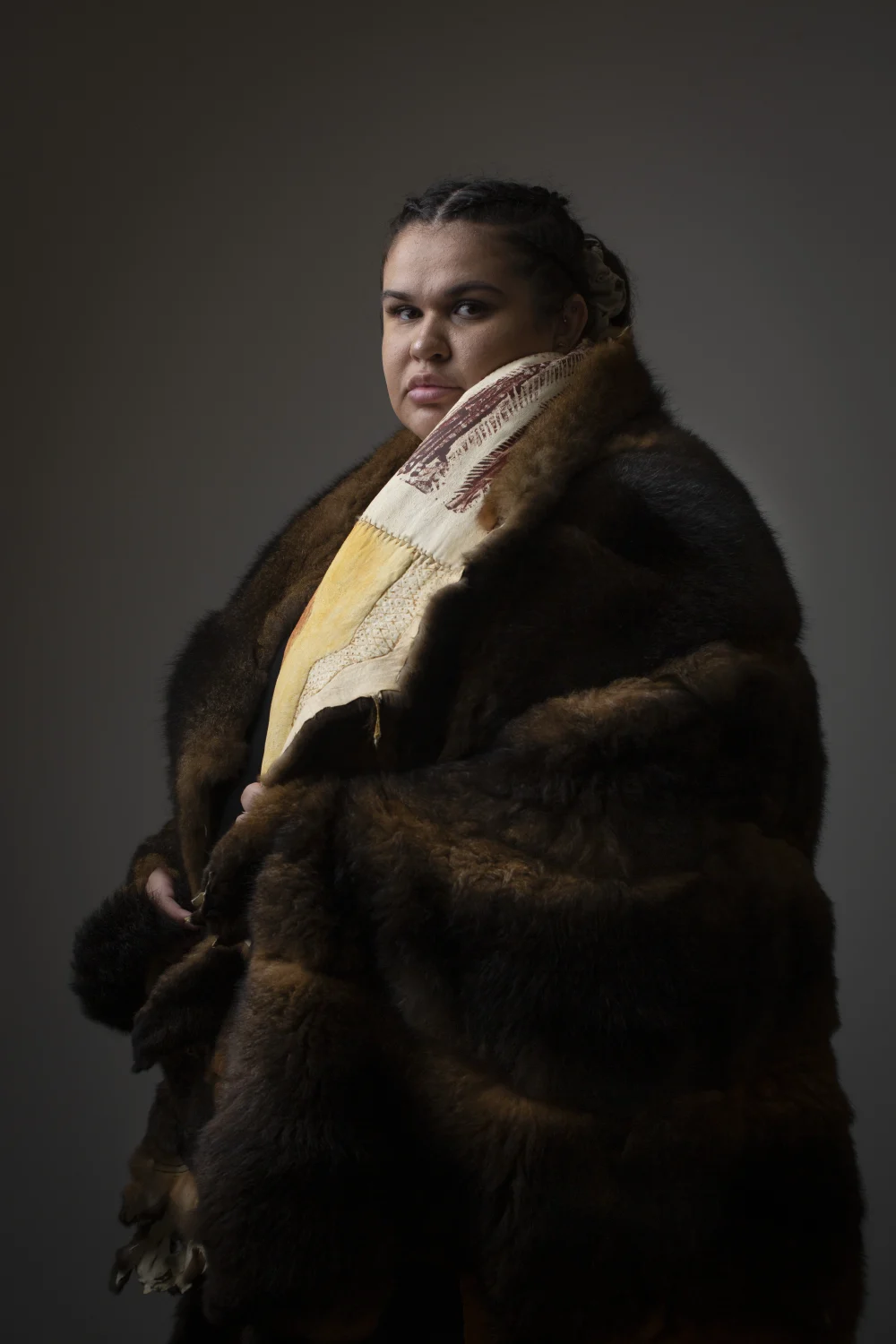
Above: Artist Kyra Mancktelow, 2021. Portrait by Russell Shakespeare. Courtesy of the artist and N. Smith Gallery, Sydney.
Art Centre: Erub Arts
Nestled 160 km northeast of Queensland’s Cape York Peninsula in the Torres Strait, Erub (Darnley Island) is one of the most geographically isolated communities in the country.
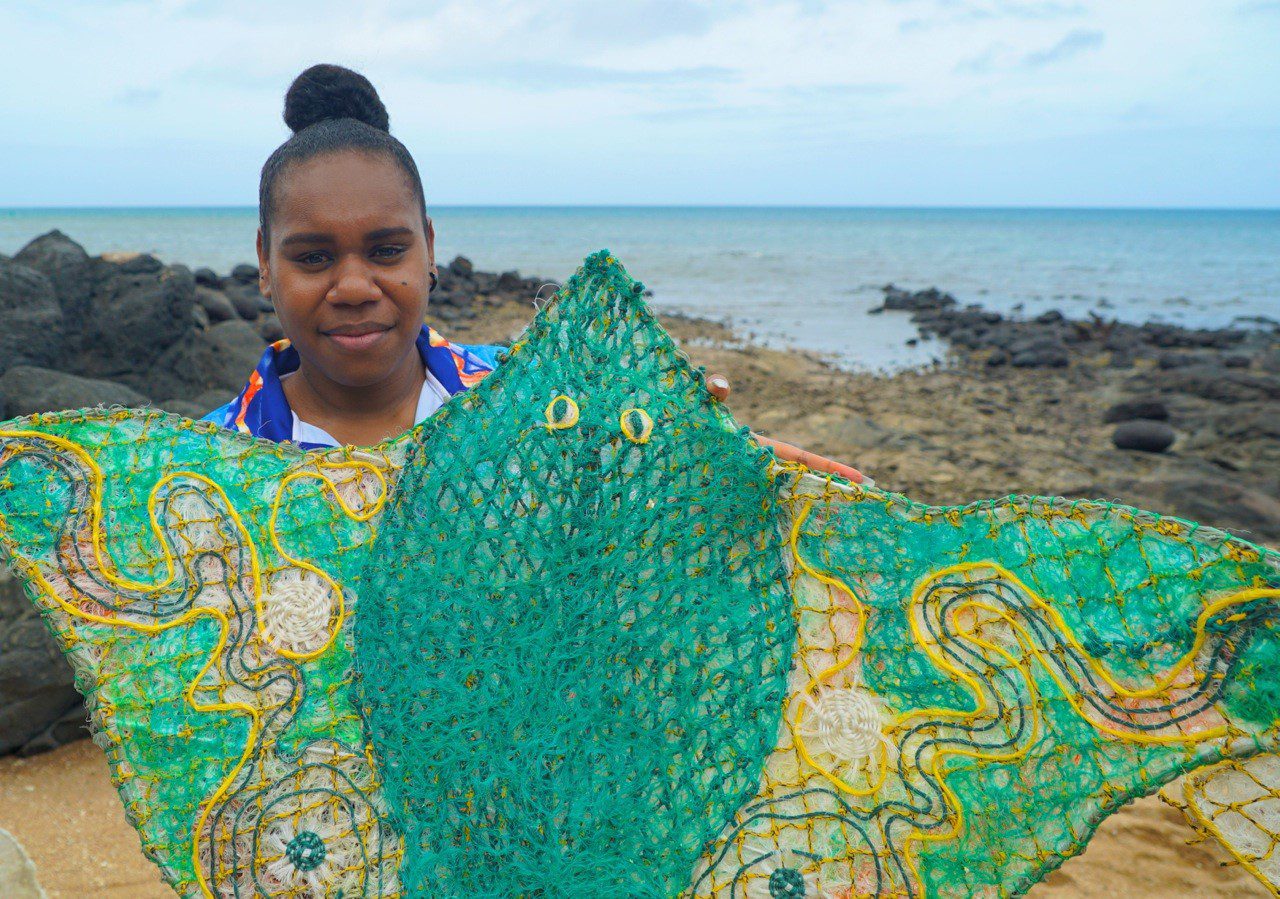
This beautiful volcanic island is situated in deep turquoise waters is home to approximately 400 Erubam le. The Art Centre works to revitalise Erubam le culture and share it with the world. Its artists have gained an international profile creating Ghost Net sculpture from abandoned fishing nets. Erub artists also work in wood-fired ceramics, works on paper, and textiles.
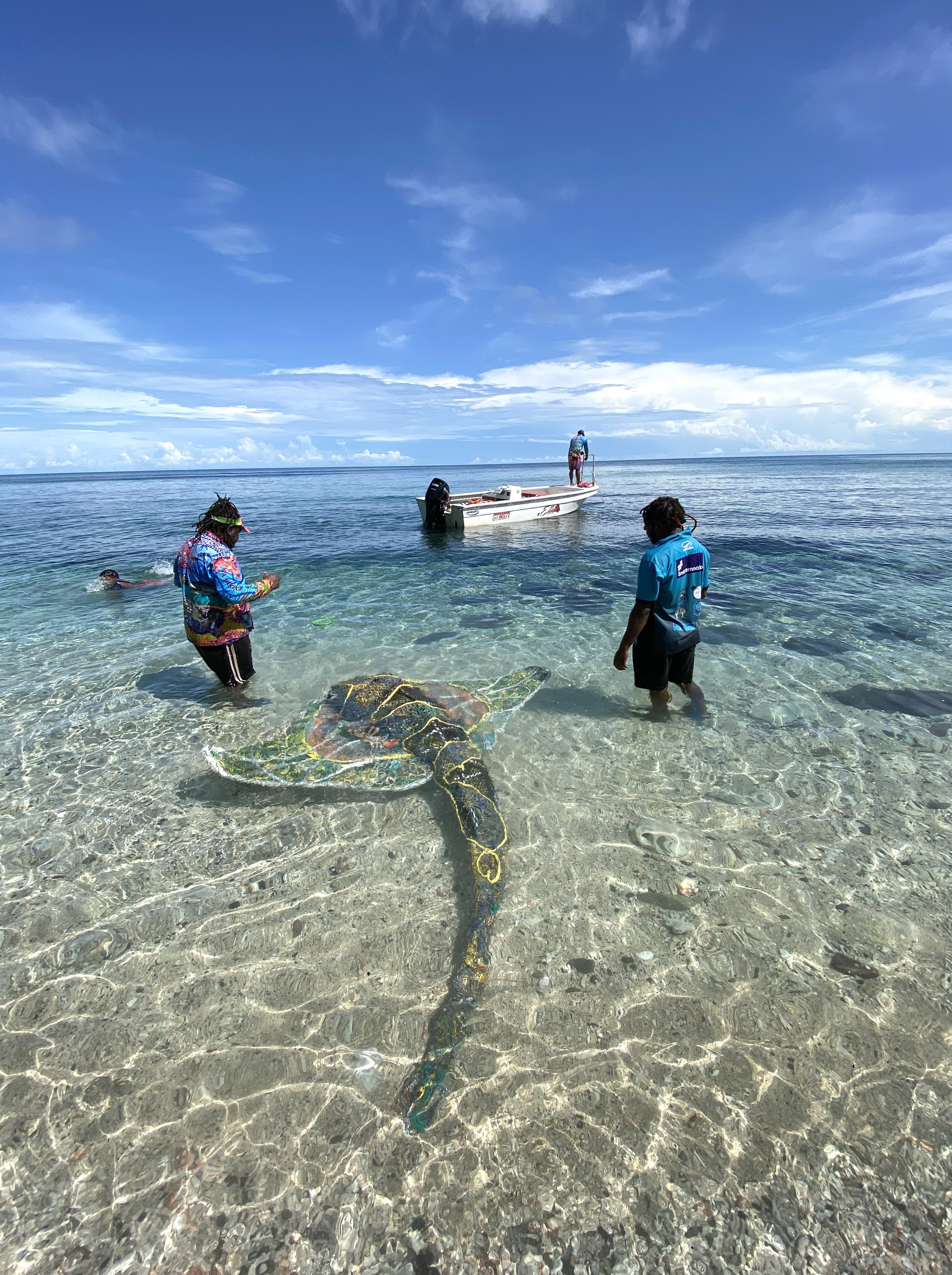
Above: Jimmy John Thaiday preparing for a water test. Below: 2) Lavinia Ketchell with her artwork, Daisy, Ghost Net, 105cm x 105cm x 5cm, 2021. 3) Erub Ladies swimming with their ghost net rays at Neapean Island. Photos by Lynnette Griffiths courtesy of Erub Arts.

Creatives: Miiesha
A proud Anangu and Torres Strait Islander woman, Miiesha (pronounced My-ee-sha) hails from the small Aboriginal community of Woorabinda in Queensland. She set fire to the Aussie music scene in 2020 with her soulful R&B sound and powerful storytelling. Her debut album Nyaaringu (translating to what happened in Pitjantjatjara language) received the 2020 ARIA for Best Soul/RnB Release and a QLD Music Award.
Miiesha was also recognised by the National Indigenous Music Awards (NIMAs) in 2020, taking out New Talent of the Year. In 2021, her deeply personal single Damaged (written with Stephen Collins) took home the Song of the Year award.
After two years of covid-prompted false starts, the 2022 NIMA reclaims its rightful place on Larrakia Country at the Darwin Amphitheatre on Saturday 6 August. With First Nations sensations Thelma Plum and King Stingray just the tip of the live performance iceberg, the night is set to truly celebrate what’s been a huge year for First Nations music.

Musician Miiesha, 2021. Courtesy of NIMA.
Art Centre: Hopevale Arts & Cultural Centre
Artists working out of Hopevale Arts & Cultural Centre immortalise their oral history in intricate canvas and weaving works. The Art Centre is also well known for its uniquely designed fabrics.
The Hopevale community comprises approximately 20 clan groups from the Guugu Yimidhirr nation. Clan knowledge transcends into a diverse range of skills handed down through family groups. Many of the artists’ works are drawn from local flora and fauna, as well as traditional land and totems.
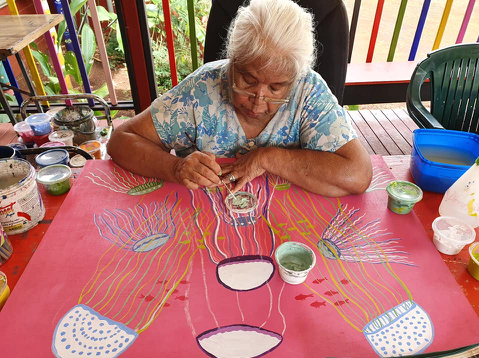
Above: Wanda Gibson painting Guuliil, Acrylic on Plywood, 60x80 cm, 2019, photo by Edwina Circuit courtesy of Hopevale Arts.
Artist: Jimmy John Thaiday
Torres Strait artist Jimmy John Thaiday has been recognised worldwide for his powerful work that explores themes of climate change and environmental degradation. The artist’s current practices is focussed primarily on Ghost Net sculpture.
“I have always loved to draw; it’s something that comes naturally and now I draw with wire to give the frames of my sculptural forms life and movement,” says the artist. “I am exploring different ways to include digital imagery and use the destructive nets and ropes. I want to bring the animals and landscape together. I want to embed myself and my community into the landscape, so we are seen as one.”
Catch Jimmy in this year’s NATSIAAs, in which he has been recognised as a deserving finalist. Work by the artist also features at the Erub Arts stand at DAAF 2022.

Above: Artist Jimmy John Thaiday. Photo by Keiran James courtesy of Erub Arts. Image below: Jimmy John Thaiday, Rile E, Ghost Net, 137cm x 110cm x 10cm, 2021. Photo by Lynnette Griffiths courtesy of Erub Arts

More to Come...
Thanks for joing part one of the Exploring Art & Culture series! Over the next few months, we’re travelling with you across Country to introduce you to just some of the Art Centres, artists, creatives and thought leaders involved in The Collective events this year.
We look forward to seeing you in the Top End this July-August! Head over to events page to see what's on.


