
The Weave of Life
Julieanne Gitjpulu combines her cultural teachings with a little innovation to create her highly collectable fibre art pieces.
WORDS BY Tina Baum | PHOTOGRAPHY courtesy of the Artist and Gapuwiyak Culture and Arts | PUBLISHED 5 November 2024

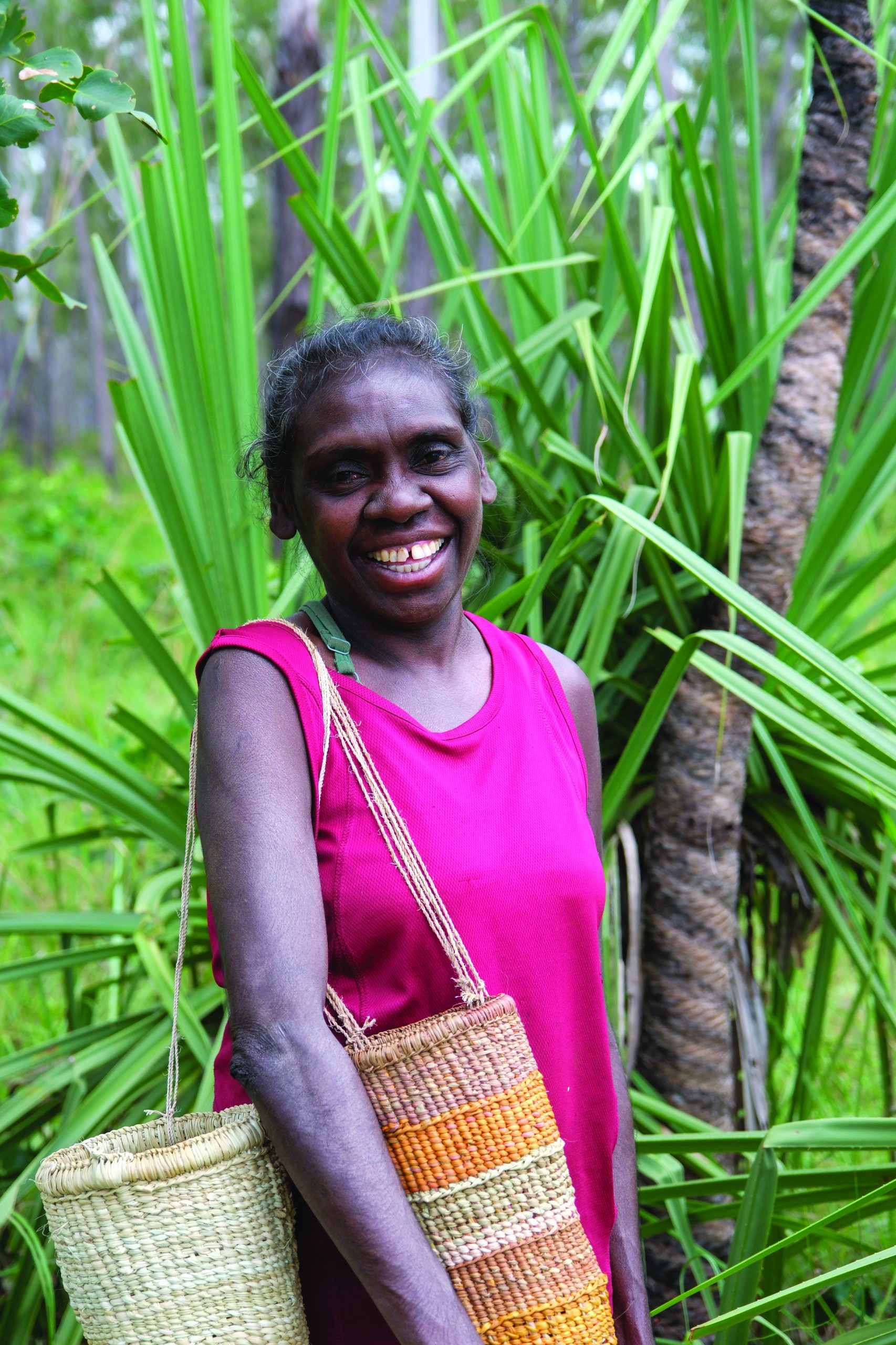
↑ Artist Julieanne Gitjpulu with her work.
Working with natural plant fibres and dyes are central to Ganalbiŋu artist and educator Julie Anne Gitjpulu’s fibre art practice. She often uses gunga (Pandanus spiralis) for the main body of her works, and balgurr raki (hand-spun bush string from the Kurrajong tree) for the handle. Combined with natural plant dyes like dhumumu (Quinine bush) and wundan (bush currant), Gitjpulu uses both the coiling and twinning weave techniques taught to her by her mother Malngumba, grandmother Marathuwarr and Aunties.
“I have been taught how to work with pandanus fibre by two of my grandmothers and my mother,” says the artist. “They are well known fibre artists. I live in Mapuru, we have many visitors coming there and I am one of the teachers. I love working with pandanus with my families.

↑ Detail of Julieanne Gitjulu’s woven works. Woven pandanus, dimensions vary.
Fibre artworks are made for various reasons, whether for everyday use for collecting and carrying, for ceremony, or as decorative sculptural forms ranging from small domestic sized to large art installations. Gitjpulu follows her cultural teachings but also use innovation to create her highly collectable fibre art.

↑ Bulpu, Bathi, (Dilly bag) 24-264. 31.5cm x 9cm.

↑ Bulpu, Bathi, (Dilly bag) 24-15. 23.5cm x 14cm.
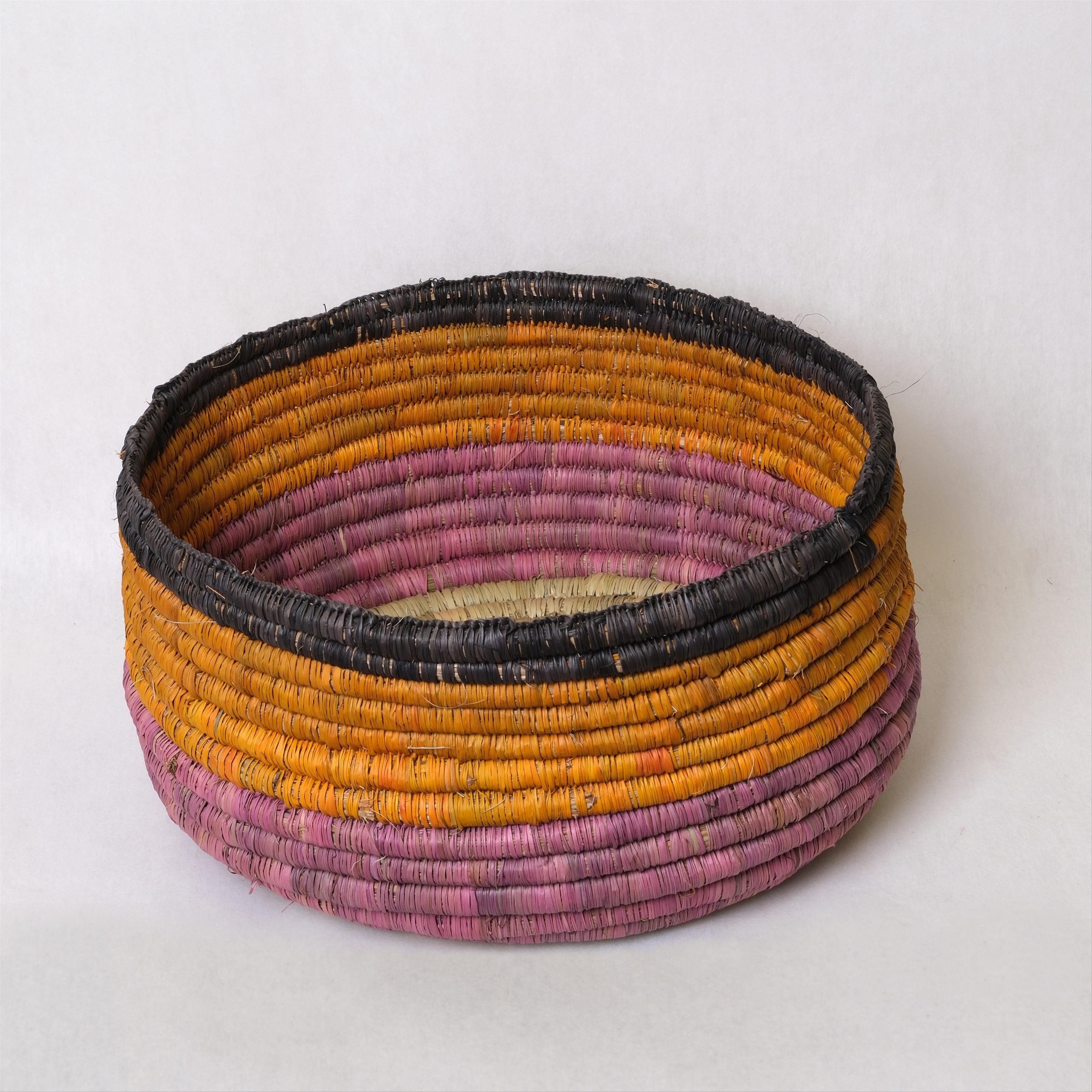
↑ Basket 24-262. 37cm x 18cm.
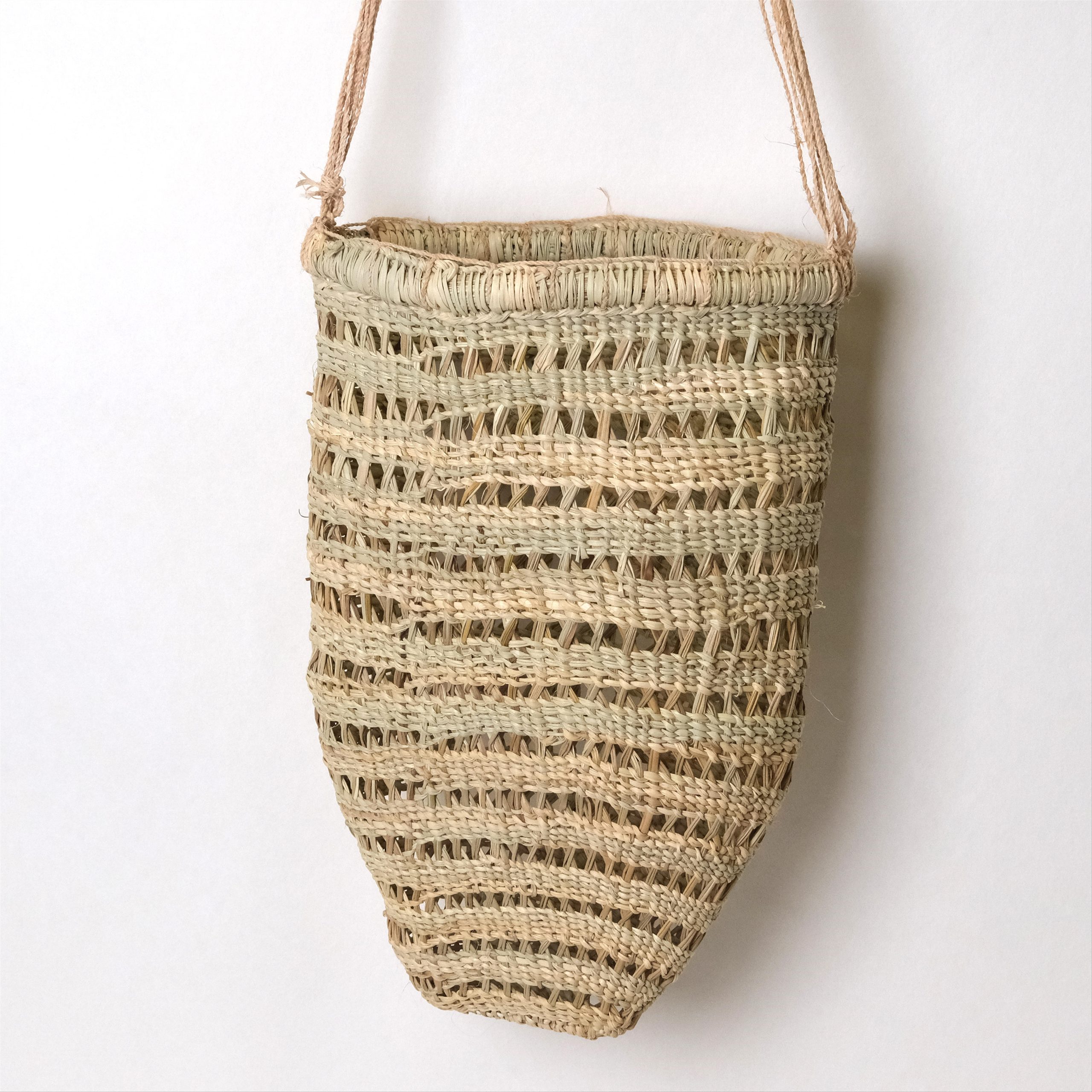
↑ Basket 24-812. 30cm x 24cm.
Gitjpulu lives primarily at her Mapuru homeland and sells her work through Gapuwiyak Culture and Arts and Elcho Island Arts at Galiwinku in east Arnhem Land in the Northern Territory. Her skills and talent have seen her recognised as a finalist in the 2024 National Aboriginal and Torres Strait Islander Art Award in Garramilla/Darwin. Gitjpulu’s fibre art practice is a celebration of her cultural and artistic expression, and by sharing her knowledge she ensures that culture is passed on to future generations.
This article originally appeared in the Art Collector 2024 Darwin Aboriginal Art Fair Special Edition, click here to read more.
Cover Art by Betty Mula, 33-24 PunuTjuta, Synthetic polymer on linen, 152 x 122 cm. Courtesy of the Artist and Mimili Maku Arts.
Contributor Tina Baum holds ties to the Gulumirrgin (Larrakia)/Wardaman/Karajarri Peoples. She is a senior curator, Aboriginal and Torres Strait Islander Art at the National Gallery of Australia.


