
The Art Collector x DAAF 2024 Special Edition is now available. Discover exclusive stories from First Nations artists and Art Centres. Grab your copy at DAAF in Darwin or online HERE.
Your price guide to some of the standout works presented at Darwin Aboriginal Art Fair 2024.
Words | Camilla Wagstaff
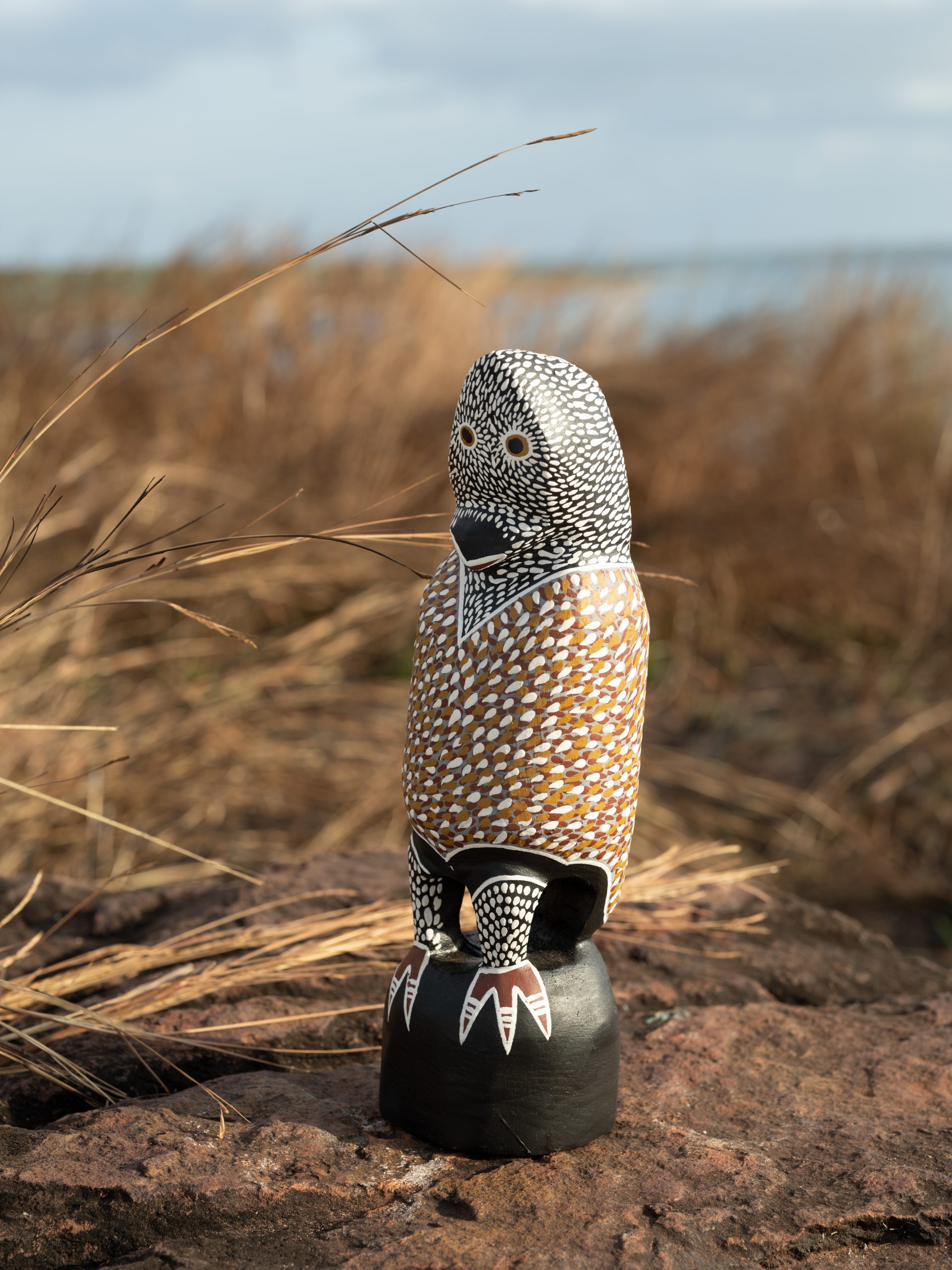
Judy Manany Gurruwiwi, Tawny Frogmouth. Carved wood, dimensions and prices vary. Photo: Siri Hayes. Courtesy: The Artist and Elcho Island Arts
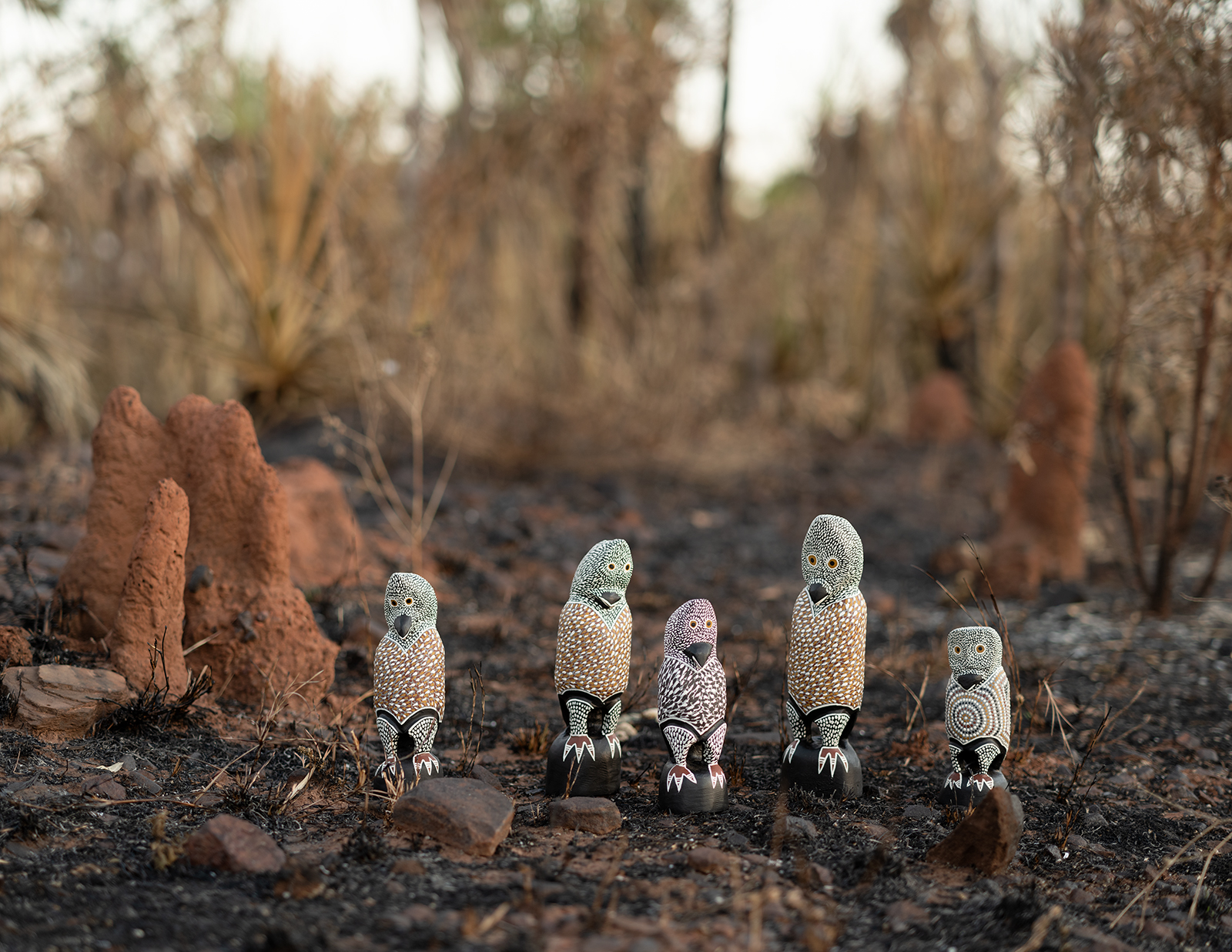
Judy Manany Gurruwiwi, Tawny Frogmouth Group. Carved wood, dimensions and prices vary. Photo: Siri Hayes. Courtesy: The Artist and Elcho Island Arts
Judy Manany Gurruwiwi
Showing with Elcho Island Arts | Price range for work: $450 for small works to up to $4,500 for larger works
The artist says:
The Art Centre Troopy takes us out to get wood, maybe halfway up the island. Then we take off the bark and dry the wood out, then we start carving and making the shapes. Birds or owls; any birds, any owls. Then we name them, so the customer will know what carvings we are doing and then our stories for those carvings. I always make traditional paints, red, black, yellow and white ochre. So people will know the Yolŋu lifestyle and then they might understand more about Yolŋu lifestyle. That’s the life that makes me happy, with ochre and doing things the right way. Not using paint from the shop.
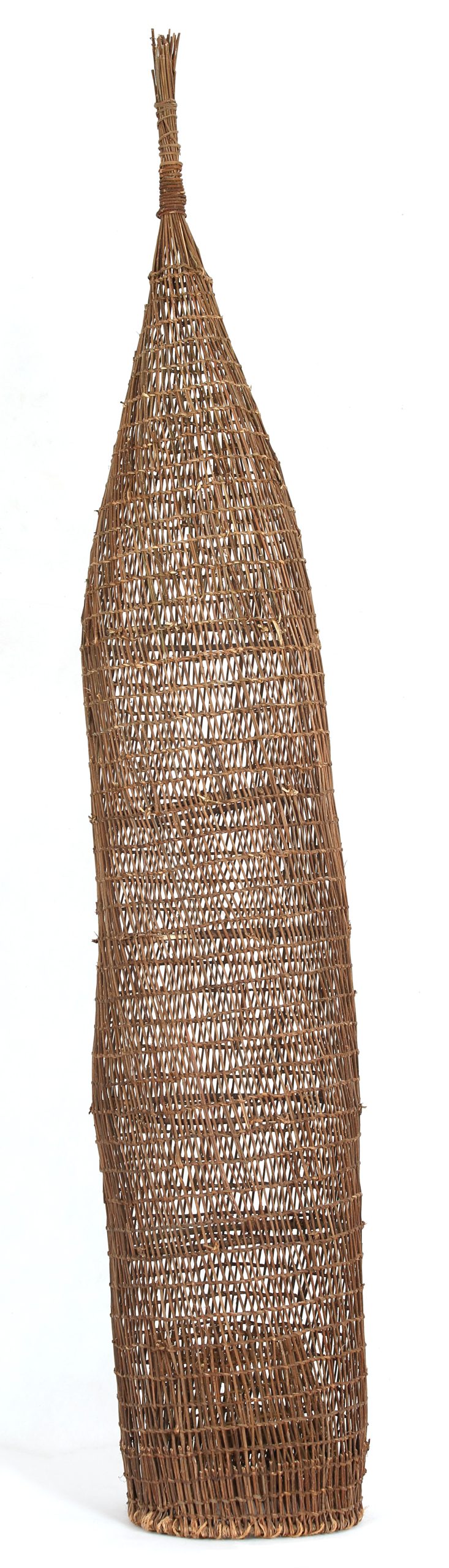
An-gujechiya (fish trap), Jungle Vine (Malaisia Scandens) and Kurrajong (Brachychiton Diversifolius) 173 x 28 x 28cm $3400. Courtesy: The Artist and Maningrida Arts & Culture
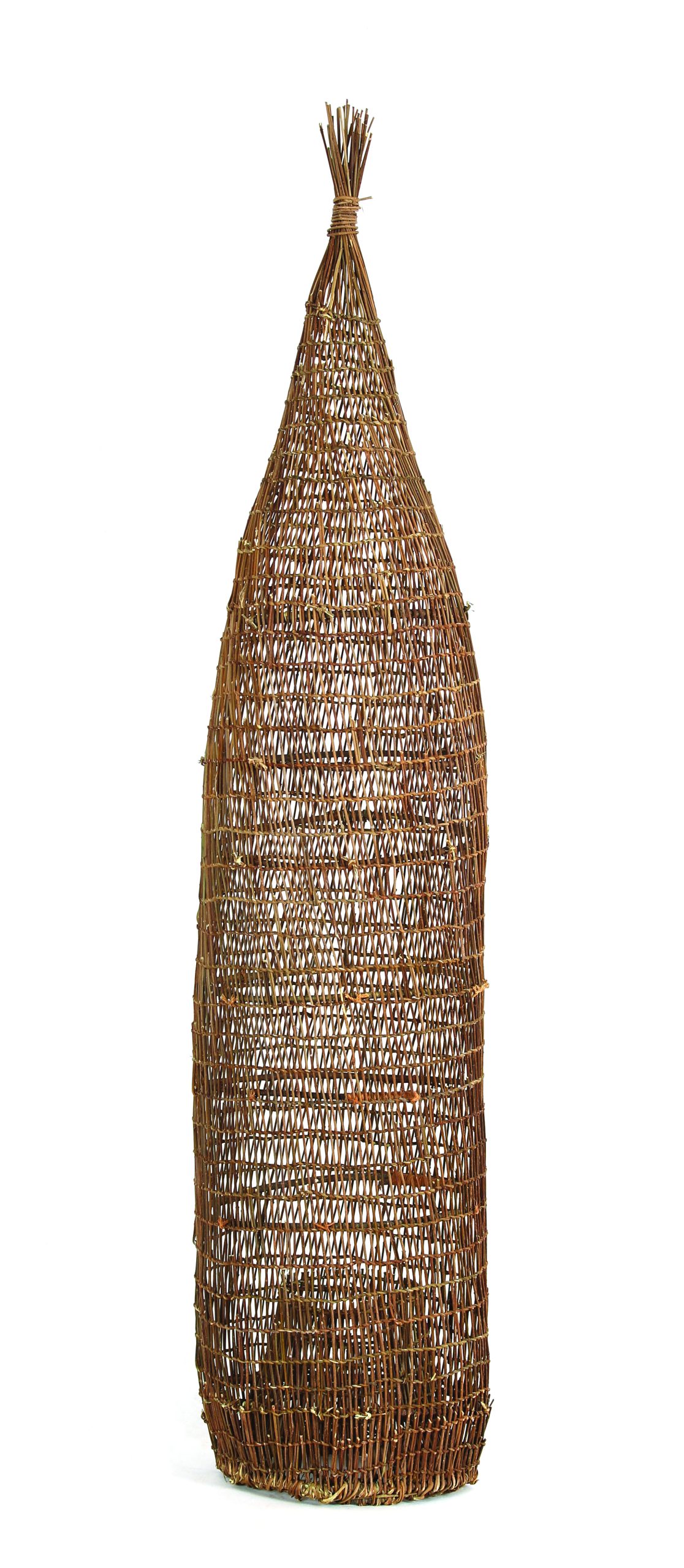
An-gujechiya (fish trap), Jungle Vine (Malaisia Scandens) and Kurrajong (Brachychiton Diversifolius) 165 x 34 x 35cm $3400. Courtesy: The Artist and Maningrida Arts & Culture
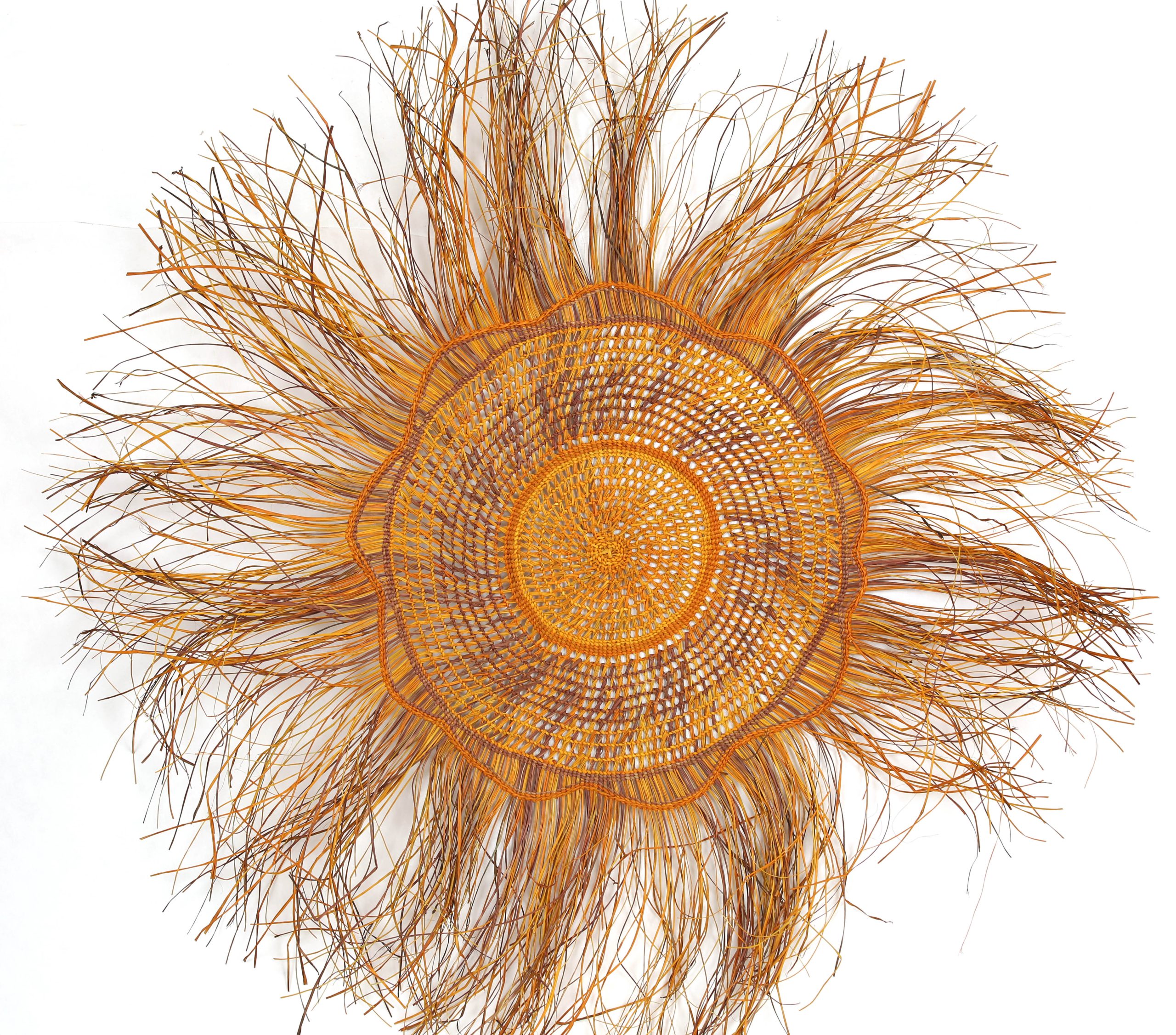
Mat, Pandanus (Pandanus Spiralis) and Natural Dyes, 64 x 64cm (woven area only ) $900. Courtesy: The Artist and Maningrida Arts & Culture
Bonnie Burarngarra
Showing with Maningrida Arts & Culture | Price range for work: $350 for small works to up to $4,000 for larger works
The artist says:
To make fish traps and fish net fences artists firstly get mirlarl (vine) from the jungle and they put it in water for one night to make it soft. Next they start weaving it. They make rings for the inside to keep the fish trap’s shape. Artists work for three or four weeks on the fish trap. They also make string from burdaga (kurrajong) to attach the bardainy (hibiscus) rings and to tie the conical end of the fish trap. This fish trap is used in saltwater and freshwater.
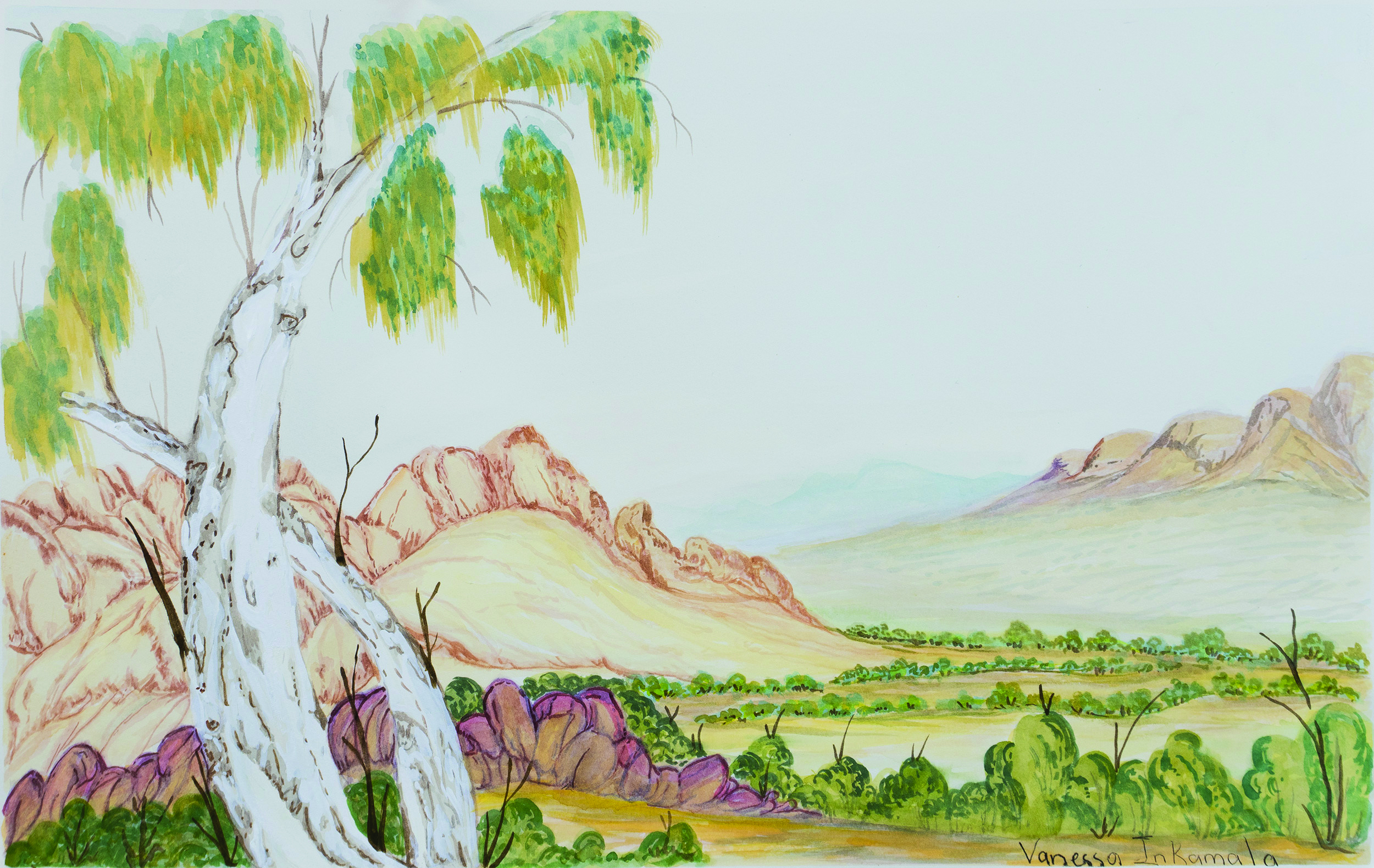
Tjoritja (West MacDonnell Ranges), NT, Watercolours on paper, 33 x 51.5 cm. Courtesy: The Artist and Iltja Ntjarra Many Hands Art Centre
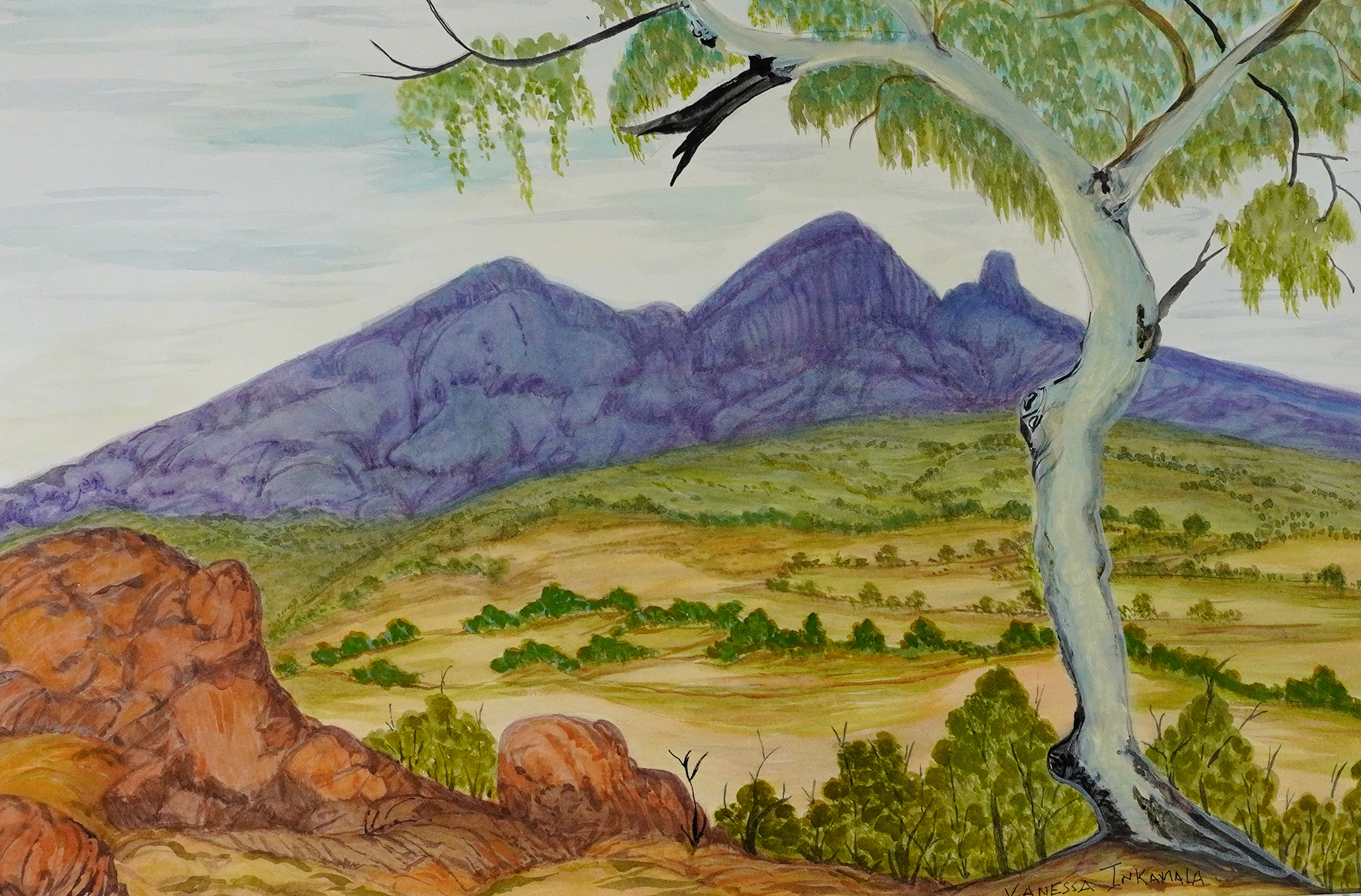
Rutjipma (Mt Sonder) , NT, Watercolours on paper, 35 x 53 cm. Courtesy: The Artist and Iltja Ntjarra Many Hands Art Centre
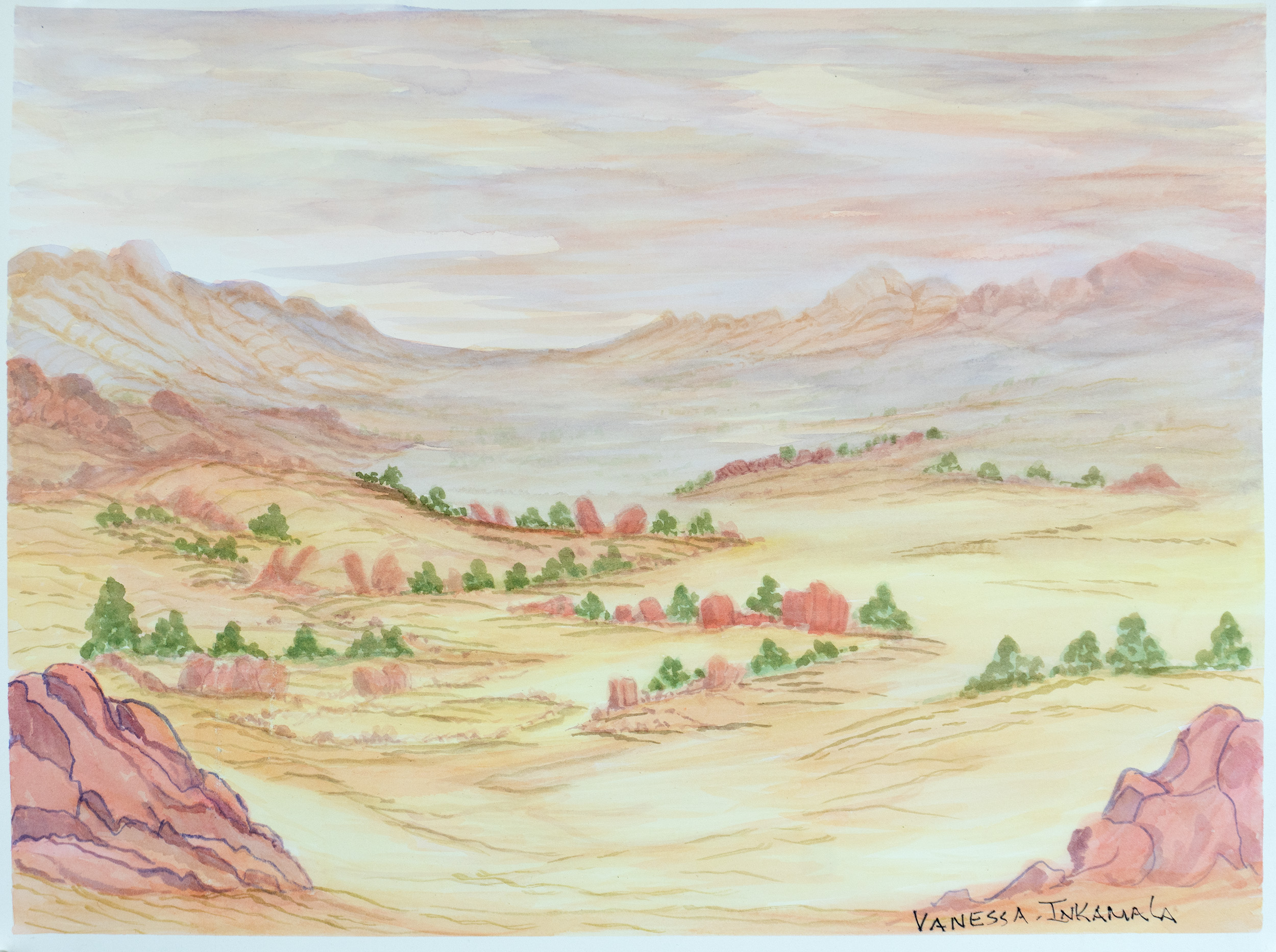
Tjoritja (West MacDonnell Ranges), NT, Watercolours on paper, 32 x 44 cm. Courtesy: The Artist and Iltja Ntjarra Many Hands Art Centre
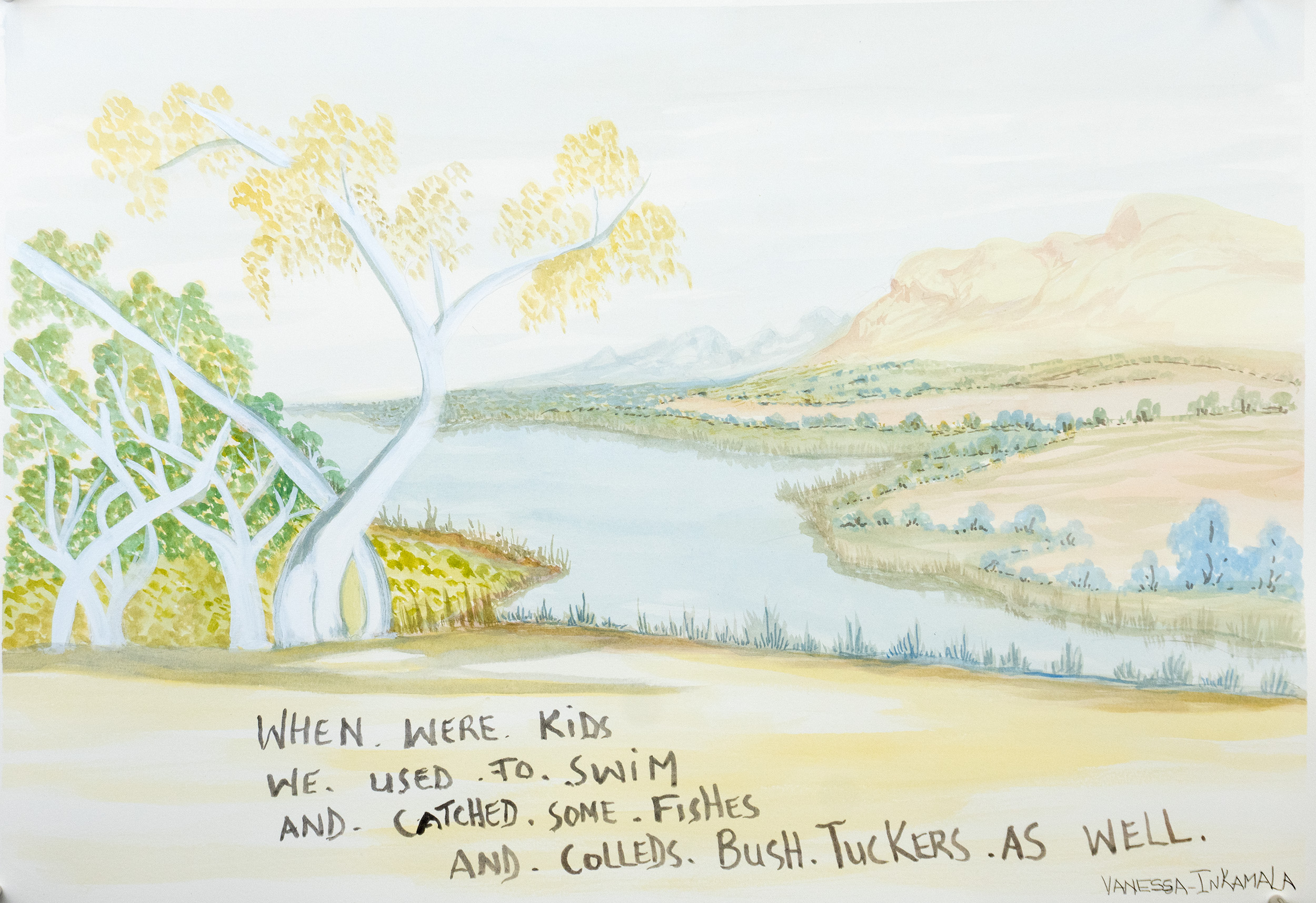
Tjoritja (West MacDonnell Ranges), Watercolours on paper, NT, 36.5 x 53cm. Courtesy: The Artist and Iltja Ntjarra Many Hands Art Centre
Vanessa Inkamala
Showing with Iltja Ntjarra Many Hands Art Centre | Price range for work: $300 for small works to up to $2,000 for larger works
The artist says:
When we were kids, we used to swim and caught some fishes and collected bush tuckers as well. I used to watch my father when I was a kid. He used to do painting. I used to sit down and watch him and learn. And that’s where I got the experience, from him. I’ve been painting for nine years at the Art Centre. I’ve always painted watercolour landscape. West MacDonnell Ranges, I always paint it. And sometimes I paint with my memories.
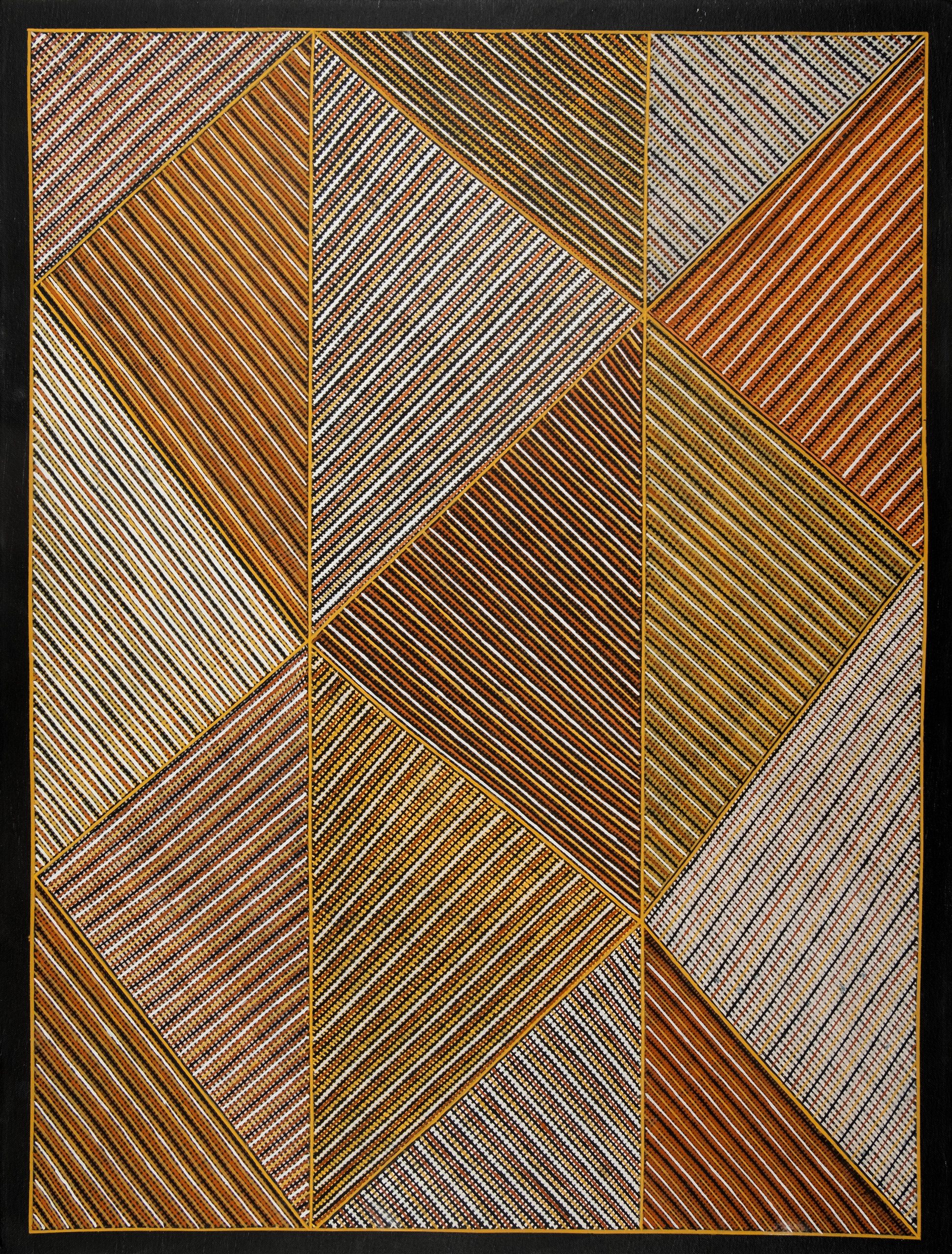
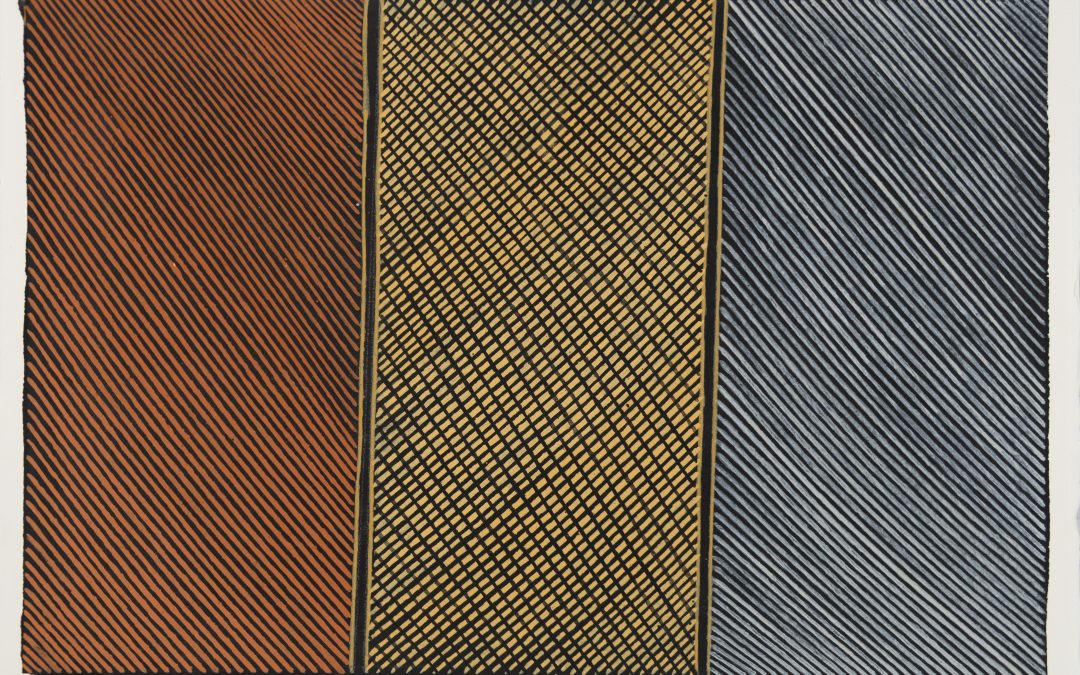
Ken Wayne Kantilla, Jilamara. Price vary. Courtesy: The Artist and Ngaruwanajirri Art Centre
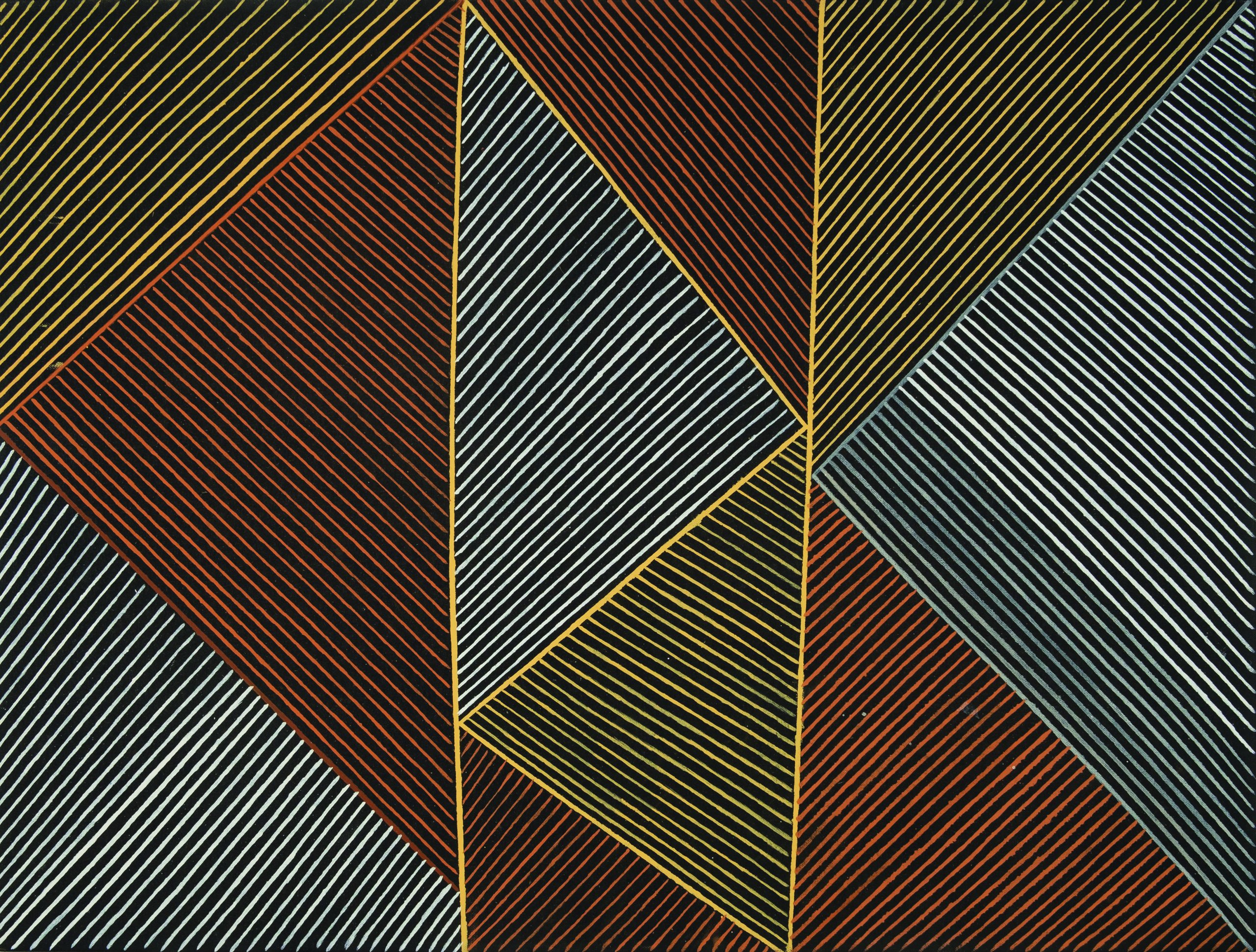
Ken Wayne Kantilla, Jilamara. Natural ochres on canvas, 60 x 80cm. $1,600. Courtesy: The Artist and Ngaruwanajirri Art Centre
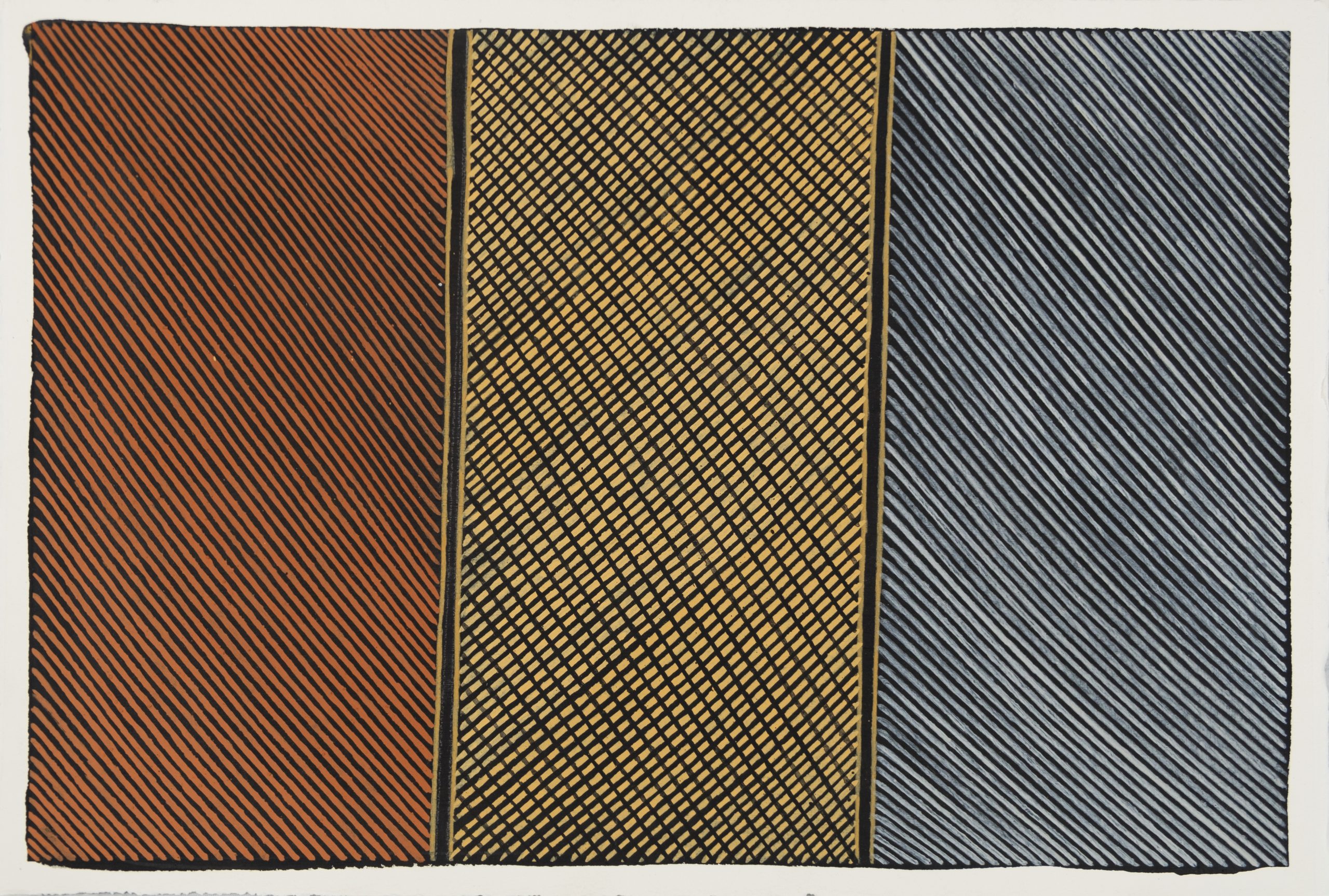
Ken Wayne Kantilla, Jilamara. Price vary. Courtesy: The Artist and Ngaruwanajirri Art Centre
Ken Wayne Kantilla
Showing with Ngaruwanajirri Art Centre | Price range for work: $300 for small works to up to $1,600 for larger works
The artist says:
I enjoy painting jilamara (Tiwi pattern and design). To me it represents family and Tiwi culture painting in ochres – red, yellow, white on titiwini (black). Painting in the ochres keeps our culture strong, connects me to Country. My jilamara comes from the old ways of body painting for ceremony like kulama (men’s business at the end of the wet season).
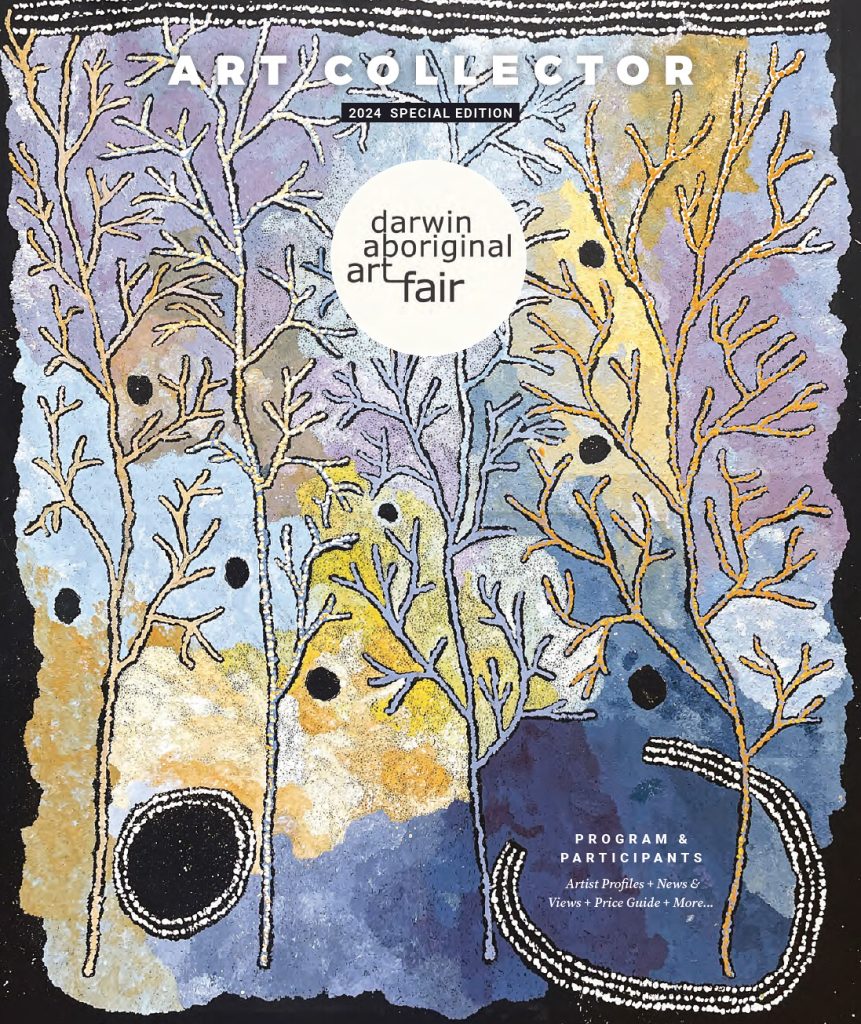
This article originally appeared in the Art Collector 2024 Darwin Aboriginal Art Fair Special Edition, click here to read more.
Cover Art by Betty Mula, 33-24 PunuTjuta, Synthetic polymer on linen, 152 x 122 cm. Courtesy of the Artist and Mimili Maku Arts.
Contributor Camilla Wagstaff, Editorial Director of Art Collector

Larrakia Country & Online
9-11 August 2024


